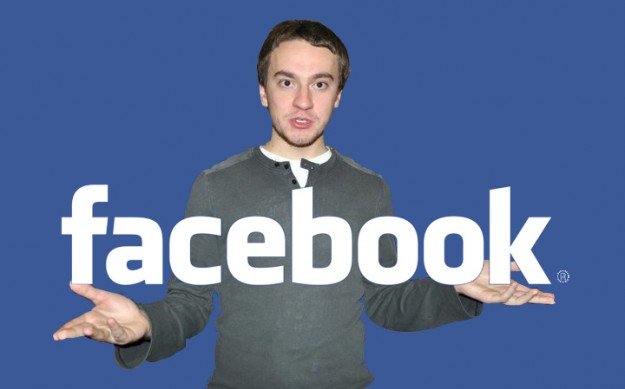
• iPhone and PS3 Hacker George Hots ‘GeoHot’ Now Works For Facebook


    Hacker George Hotz ‘GeoHot’, who recently settled a lawsuit with Sony for publishing a PlayStation 3 crack online, now works for Facebook. His exact position with the company is unclear, but he may be on a the development team tasked with building the social network’s new Pad app.

    Geohot reportedly started working for Facebook last month but the announcement was made on 17th June only to be discovered today.

    According to iDB:

    We were just tipped off by the folks at Tech Unwrapped that George Hotz is now working for Facebook. Needless to say that I was a bit skeptical about the news and when I inquired for more details, I was pointed to GeoHot’s very own Facebook profile where he confirms that he is indeed working for Facebook…

    According to Gabe Rivera, GeoHot started working for Facebook in May, but he only announced it on June 17. If you have a look at his Facebook profile, it’s pretty clear that he is not joking.

    Hacker Joshua Hill, aka @p0isixNinja, who said in a recent interview that Hotz had made the move. Hill reportedly challenged Hotz to a iPad 2 jailbreak duel. Watch the live Q&A session:

    Geohot is a well-known for having originally unlocked the iPhone for use on wireless carriers other than AT&T and also for hacking into Sony’s PlayStation 3 console back in January and later sued by Sony. The case settled later in April.

    GeoHot is also known for iOS jailbreaking using a bootrom exploit found since iOS 4.1. The jailbreak tool called Limera1n and still in use since then.

    [via Yahoo]

  • Anonymous Hacker Group Possibly Behind PSN Security Breach


    According to Financial Times, two long-time members belonging to the hacker group Anonymous says it’s likely that other group members were behind the attack that took Sony by surprised–contrary to what the group said yesterday in their press release, released yesterday.

    Sony has said in a letter to the US Congress that it found evidence suggesting Anonymous’ involvement but has not directly accused the group of the crime, which exposed millions of customer accounts.

    One member from the group told FT that he saw the technical details of the vulnerability in Sony’s network prior to the attack on the PlayStation Network; the member added, “The hacker that did this was supporting OpSony’s movements”.

    Another long-time member of the Anonymous group told FT that it’s very likely that other members from the group hacked Sony, “If you say you are Anonymous, and do something as Anonymous, then Anonymous did it,” said the hacker, who uses the online nickname Kayla. “Just because the rest of Anonymous might not agree with it, doesn’t mean Anonymous didn’t do it.”

    We’re not sure who to believe? More on PSN hack here.

  • PSN Outage Due to ‘External Intrusion’


    Following to Users being unable to sign on or greeted with PSN Error Message 80710A06 when trying to log in to PSN, Sony was investigating the cause of the outages, which began late last night. No word on whether or not this outage is related to the same outage occurrences from earlier this month that was likely spurred on by the hacker group known as Anonymous.

    Sony tonight issued a statement saying the PlayStation Network outage is due to an “external intrusion” but did not clarify beyond that. A timetable for when PSN will be up and running again was also not provided.

    Hacker group Anonymous said today they are not claiming responsibility for this particular outage, however.

    The statement in full from Senior Director of Corporate Communications Patrick Seybold can be read below:

    An external intrusion on our system has affected our PlayStation Network and Qriocity services. In order to conduct a thorough investigation and to verify the smooth and secure operation of our network services going forward, we turned off PlayStation Network & Qriocity services on the evening of Wednesday, April 20th.

    Providing quality entertainment services to our customers and partners is our utmost priority. We are doing all we can to resolve this situation quickly, and we once again thank you for your patience. We will continue to update you promptly as we have additional information to share.

    [via: ign]

  • New Trojan Targets the Mac


    Some security researchers have long complained that Apple won’t take security seriously because doing so conflict with the company’s marketing message that Mac buyers need not worry about being attacked. The discovery of a beta of a Mac-attacking Trojan once again shows Mac invulnerability to be a myth. And in an unrelated move, Apple has reached out to security researchers, showing that it may finally take security seriously.

    The security company Sophos says that it’s found the beta of a backdoor Trojan targeting the Mac that’s “a variant of “a well-known Remote Access Trojan (RAT) for Windows known as darkComet.”

    The author calls it the ‘BlackHole RAT,’ strongly implying that plans are to have it masquerade as the legitimate Black Hole security application designed to keep a Mac safe by purging private information such as clipboard data and recent file lists.

    Sophos is quick to point out that the Trojan is not yet finished. But the company clearly believes that attacks on the Mac are in the offing. It notes on its blog:

    It appears there is a new backdoor Trojan in town and it targets users of Mac OS X. As even the malware itself admits, it is not yet finished, but it could be indicative of more underground programmers taking note of Apple’s increasing market share.

    That Sophos researcher Chet Wisniewski has seen another Trojan called HellRTS already in circulation on file-sharing sites used to pirate Mac software.

    Apple hasn’t responded specifically to these new threats, but there’s a major, encouraging sign that it is taking Mac security very seriously, possibly because it now has a big enough market share that malware writers see it as a financially viable target.

    The Edible Apple blog reports that Apple is offering security experts free preview versions of OS X 10.7, called Lion, “so that they can take a look at Apple’s new security measures and presumably reach back to Apple with any thoughts, observations, and concerns they might have.”

    The site reports that Apple sent out the following note to security experts:

    “I wanted to let you know that I’ve requested that you be invited to the prerelease seed of Mac OS X Lion, and you should receive an invitation soon. As you have reported Mac OS X security issues in the past, I thought that you might be interested in taking a look at this. It contains several improvements in the area of security countermeasures.”

    Security researchers so far are pleased that Apple seems to be taking security more seriously than they have in the past. Edible Apple reports that MacBook hacker and security consultant Dino Dai Zov tweeted “This looks to be a step in the direction of opening up a bit and inviting more dialogue with external researchers.”

    And CNet quotes OS X hacker Charlie Miller saying in an email:

    “As far as I know they have never reached out to security researchers in this way. Also, we won’t have to pay for it like everybody else. It’s not hiring us to do pen-tests of it, but at least it’s not total isolation anymore, and at least security crosses their mind now.”

    That’s more than just faint praise, it appears that Apple may finally accept that security needs to trump marketing.

    [via: computerworld]