Science has the power to harness energy, allow human flight, help cure the sick, and explain much about the world. But as amazing and beneficial as science is, it cannot explain everything. Scientists may never know exactly how the universe began, or help to settle matters of faith. The same is true for the paranormal world. Though science can explain many strange phenomena, some mysteries remain to be solved–often because there is simply not enough information to reach a definitive conclusion. Some of these phenomena may one day be fully understood, as many things that were once mysterious or unexplained (such as the causes of disease) are now.
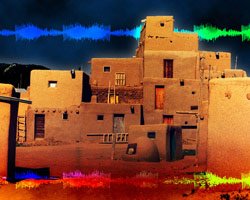
 Some residents and visitors in the small city of Taos, New Mexico, have for years been annoyed and puzzled by a mysterious and faint low-frequency hum in the desert air. Oddly, only about 2 percent of Taos residents report hearing the sound. Some believe it is caused by unusual acoustics; others suspect mass hysteria or some secret, sinister purpose. Whether described as a whir, hum, or buzz–and whether psychological, natural, or supernatural- -no one has yet been able to locate the sound’s origin.
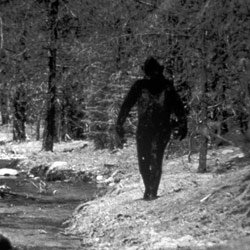
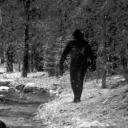 For decades, large, hairy, manlike beasts called Bigfoot have occasionally been reported by eyewitnesses across America. Despite the thousands of Bigfoot that must exist for a breeding population, not a single body has been found. Not one has been killed by a hunter, struck dead by a speeding car, or even died of natural causes. In the absence of hard evidence like teeth or bones, support comes down to eyewitness sightings and ambiguous photos and films. Since it is logically impossible to prove a universal negative, science will never be able to prove that creatures like Bigfoot and the Loch Ness monster do not exist, and it is possible that these mysterious beasts lurk far from prying eyes.
 Whether we call it gut feelings, a “sixth sense,” or something else, we have all experienced intuition at one time or another. Of course, gut feelings are often wrong (how many times during aircraft turbulence have you been “sure” your plane was going down?), but they do seem to be right much of the time. Psychologists note that people subconsciously pick up information about the world around us, leading us to seemingly sense or know information without knowing exactly how or why we know it. But cases of intuition are difficult to prove or study, and psychology may only be part of the answer.
- Mysterious Disappearances
 People disappear for various reasons. Most are runaways, some succumb to accident, a few are abducted or killed, but most are eventually found. Not so with the truly mysterious disappearances. From the crew of the Marie Celeste to Jimmy Hoffa, Amelia Earhart, and Natalee Holloway, some people seem to have vanished without a trace. When missing persons are found, it is always through police work, confession, or accident never by “psychic detectives”). But when the evidence is lacking and leads are lost, even police and forensic science can’t always solve the crime.
 From the Shakespeare play “MacBeth” to the NBC show “Medium,” spirits of the dead have long made an appearance in our culture and folklore. Many people have reported seeing apparitions of both shadowy strangers and departed loved ones. Though definitive proof for the existence of ghosts remains elusive, sincere eyewitnesses continue to report seeing, photographing, and even communicating with ghosts. Ghost investigators hope to one day prove that the dead can contact the living, providing a final answer to the mystery.
 Dejà vu is a French phrase meaning “already seen,” referring to the distinct, puzzling, and mysterious feeling of having experienced a specific set of circumstances before. A woman might walk into a building, for example, in a foreign country she’d never visited, and sense that the setting is eerily and intimately familiar. Some attribute dejà vu to psychic experiences or unbidden glimpses of previous lives. As with intuition (see #3), research into ,human psychology can offer more naturalistic explanations, but ultimately the cause and nature of the phenomenon itself remains a mystery.
 There is no doubt that UFOs ( Unidentified Flying Objects ) exist–many people see things in the skies that they cannot identify, ranging from aircraft to meteors. Whether or not any of those objects and lights are alien spacecraft is another matter entirely; given the fantastic distances and effort involved in just getting to Earth from across the universe, such a scenario seems unlikely. Still, while careful investigation has revealed known causes for most sighting reports, some UFO incidents will always remain unexplained.
- Near-Death Experiences and Life After Death
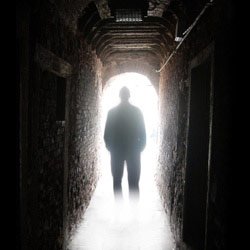
 People who were once near death have sometimes reported various mystical experiences (such as going into a tunnel and emerging in a light, being reunited with loved ones, a sense of peace, etc.) that may suggest an existence beyond the grave. While such experiences are profound, no one has returned with proof or verifiable information from “beyond the grave.” Skeptics suggest that the experiences are explainable as natural and predictable hallucinations of a traumatized brain, yet there is no way to know with certainty what causes near-death experiences, or if they truly are visions of “the other side.”
 Psychic powers and extra-sensory perception (ESP) rank among the top ten unexplained phenomena if for no other reason than that belief in them is so widespread. Many people believe that intuition (see #3) is a form of psychic power, a way of accessing arcane or special knowledge about the world or the future. Researchers have tested people who claim to have psychic powers, though the results under controlled scientific conditions have so far been negative or ambiguous. Some have argued that psychic powers cannot be tested, or for some reason diminish in the presence of skeptics or scientists. If this is true, science will never be able to prove or disprove the existence of psychic powers.
 Medical science is only beginning to understand the ways in which the mind influences the body. The placebo effect, for example, demonstrates that people can at times cause a relief in medical symptoms or suffering by believing the cures to be effective–whether they actually are or not. Using processes only poorly understood, the body’s ability to heal itself is far more amazing than anything modern medicine could create.
+ Source


 Just replace some of the high calorie foods you eat with fruits, vegetables and other water dense foods that keep you just as full.