Besides managing day-to-day operations while acting as Apple’s CEO, Steve Jobs‘ impact and role on all development stages of the innovative products were active. New York Times’ Miguel Helft posted a run down of patents that were credited to the great late Steve.
The 317 Apple patents that list Steven P. Jobs among the group of inventors offer a glimpse at his legendary say over the minute details of the company’s products — from the company’s iconic computer cases to the glass staircases that are featured in many Apple stores.
Not to mention, Microsoft’s Bill Gates is only listed on 9 patents while Google’s co-founders Larry Page and Sergey Brin have “more than a dozen Google patents.â€
The Apple chairman and co-founder, Steve Jobs, passed away Wednesday October, 5th, at the age of 56, the company and his family said in short statements. Neither specified the cause of death, although Jobs had been battling pancreatic cancer and had received a liver transplant several years ago.
Last week, the WSJreported that Apple was experimenting with “a new way of charging” the 2012 iPhone. Of course, wireless charging isn’t a new technology though the current implementations of it have been somewhat limited.
The original Palm Pre launched with an induction charger which allows users to charge their device when it is laid on a special charging mat. The disadvantages of such inductive chargers is the need for near physical contact in order for the power to be transferred as well as heat/power limitations.
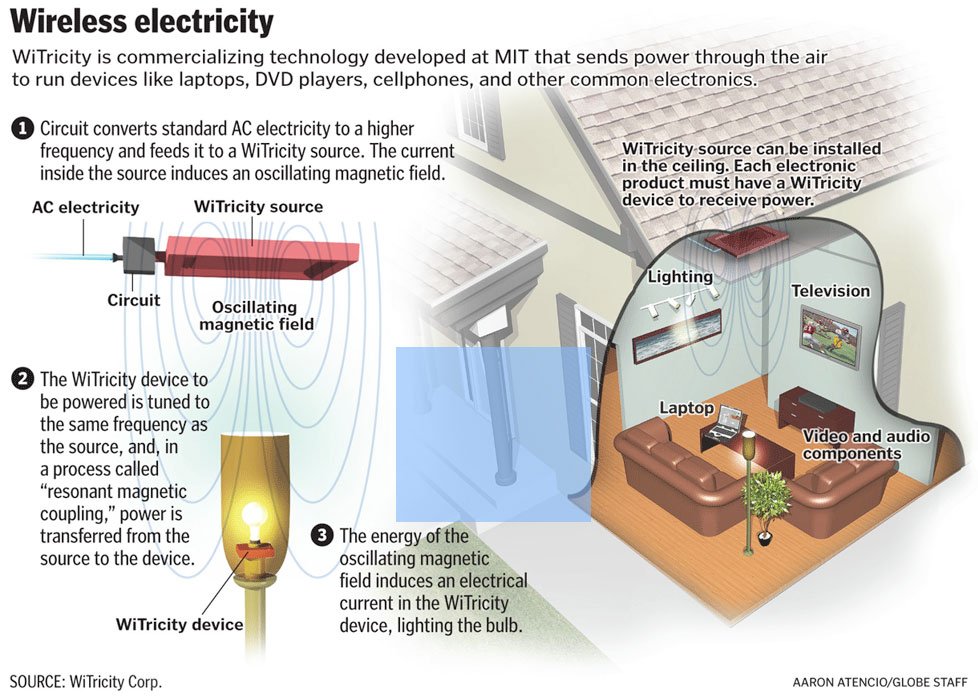
A 2007 startup company called WiTricity, however, has been working on some significant advances in wireless electricity that has gotten the attention of much of the industry including Apple. WiTricity is based on the research from MIT’s labs where scientists showed a new method for transferring larger amounts of power wirelessly over more practical distances (up to a couple of meters) than traditional induction.
The magnetic fields of two properly designed devices with closely matched resonant frequencies can couple into a single continuous magnetic field. Prof. SoljaÄić’s team showed how to use this phenomenon to enable the transfer of power from one device to the other at high efficiency and over a distance range that is useful for real-world applications.
WiTricity has already received a significant amount of industry attention. The CEO of WiTricity demoed the technology at TED in 2009. Intel has been experimenting with the technology in their labs. Toyota has even collaborated with and invested in the company to develop automotive wireless charging systems.
The link to Apple comes by way of a international patent application from Apple called “Wireless power utilization in a local computing environment.” The application was first published in May of this year and specifically details the same resonance technology and refers to the original paper published by the MIT researchers.
Apple describes a scenario where your iMac could be the source of this resonance power to provide a virtual charging area in front of your computer. Keyboards, mice and even mobile electronic devices like the iPhone or iPad could be charged simply be being in a 1 meter proximity to your computer. In typical Apple fashion, they describe that “by doing away with clumsy and annoying cables and eliminating the need to replace batteries, an easy to use and efficient local computing environment can be provided to the user.”
The technology is said to be safe, relying on magnetic fields. WiTricity CEO is seen below presenting the technology at the 2009 TED and even shows it wirelessly powering a modified Apple iPhone.
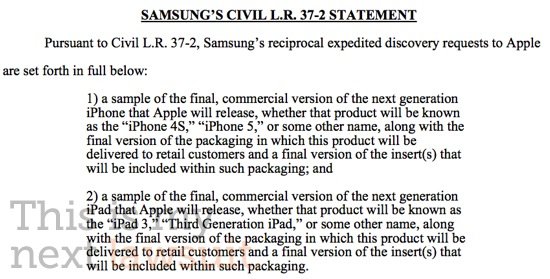
As part of the ongoing lawsuits between Apple and Samsung, started back in April when Apple sued Samsung over the “look and feel†of the Galaxy phones and tablets. This Is My Nextpoints to an interesting piece of information as now Samsung is requesting to see some of Apple’s unreleased final and commercial versions of products . Namely the iPad 3 and the next iPhone, be it iPhone 4S or iPhone 5. This is to ensure and evaluate if their future products, like the Droid Charge and the Galaxy Tab 10.1, could share similar features with them.
This move comes after Apple requested to see some of Samsung’s unreleased products, which most of which were publicly released before, Droid Charge, Galaxy Tab 8.9, Galaxy Tab 10.1, Infuse 4G and Galaxy S 2. Providing that only Apple legal team will get access to the devices. Similarly now Samsung says only the company’s lawyers would be able to see the iPhone 5 and iPad 3, with no one else inside the company getting access to the units.
Samsung’s asking for a court order requiring Apple to produce “the final, commercial versions†of the next-generation iPhone and iPad and their respective packaging by June 13, 2011, so it can evaluate whether there’ll be confusion between Samsung and Apple’s future products. If the final versions aren’t available, Samsung wants “the most current version of each to be produced instead.
Samsung says “fundamental fairness†requires Apple to give up its future products, since Samsung had to do the same. Tellingly, Samsung doesn’t reference any precedent or law to bolster this line of argument — it’s basically just asking the court to be nice.
The full breakdown of Samsung’s latest request can be read over This Is My Next
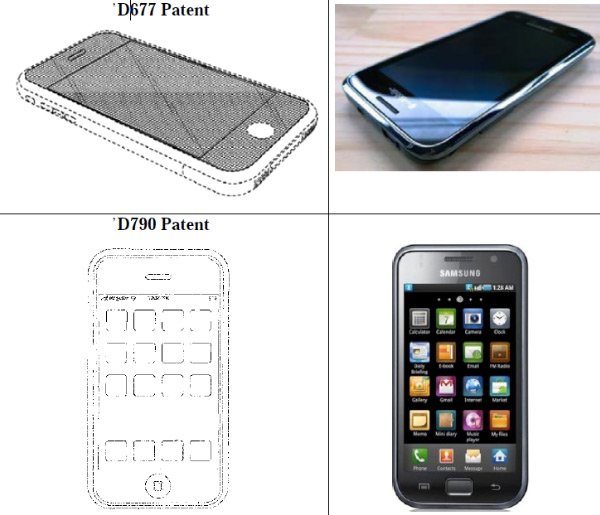
The legal battle between Apple and Samsung has taken a new ride. Apple is suing the Korean corporation over alleged copying the “look and feel†of the iPhone and iOS with its Galaxy range, and a federal court is forcing Samsung to hand over samples of new phones for Apple to pore over. Only Apple’s legal team for this case will see the products, so no-one from Apple or even Apple’s in-house lawyers will see the rival devices.
Samsung Galaxy S 2 and Infuse 4G are on sale now, the other three devices Droid Charge, Galaxy Tab 8.9 and Galaxy Tab 10.1 aren’t yet on the market. As noted byCnet UK
Apple’s legal battle with Samsung has taken a new twist. The California outfit is suing the Korean corporation over alleged copying of Apple products in Samsung’s Android range, and a federal court is forcing Samsung to hand over samples of new phones for Apple to pore over.
Normally, there’d be three months before Samsung had to hand over samples, but San Jose Judge Lucy Koh has decided that Samsung has already been shooting its mouth off about the unreleased phones and can’t claim they’re secret models, Courthouse News reports. Apple points out that Samsung even gave away a Galaxy Tab 10.1 tablet to all 5,000 people at the recent Google I/O developer conference.
Apple claims Samsung is causing confusion in the minds of the phone-buying public by copying the look and feel of the iPhone and iPad in the design of phones and tablets, the interface and even the packaging. Samsung even has its own version of the iPod touch, which strips out the phone functions — the Galaxy S WiFi 5.0 and Galaxy S WiFi 4.0.