• The first 30 minutes of God of War III


    In the end there will be only chaos

    Last week, I was lucky enough to be invited to Sony’s God of War III event here in Hollywood. At the event, under the light of those cool fake torches that blow around paper to look like fire, various members of the development team showed off the first 30 minutes of the upcoming PlayStation 3 title, in addition to answering some questions about the highly (highly!) anticipated game.

    After a presentation from Game Director Stig Asmussen projecting some game footage on a huge screen, all the members of the press were led into a huge room full of stations where we could actually play the final build of God of War III. Well, the first 30 minutes of the final build, anyway.

    And I am here to tell you that the first 30 minutes of God of War III are the best first 30 minutes of any videogame I have ever played.

    You really are not ready for this game. Seriously.

    I am on such a high from the extraordinary experience of playing God of War III, that I am ready to take you through a detailed walkthrough of every visceral, out-of-control second of the awesome opening. Hit the jump for more hyperbole than you can handle.
    The first 30 minutes of God of War III

    God of War III (PS3)
    Developer: Sony Santa Monica Studio
    Publisher: Sony Computer Entertainment
    To be released: March 16, 2010

    [Disclaimer: This section of the game includes the sequence already covered by Nick Chester back in January, but it expands into much more. If it starts off familiar, keep reading. Trust me.]

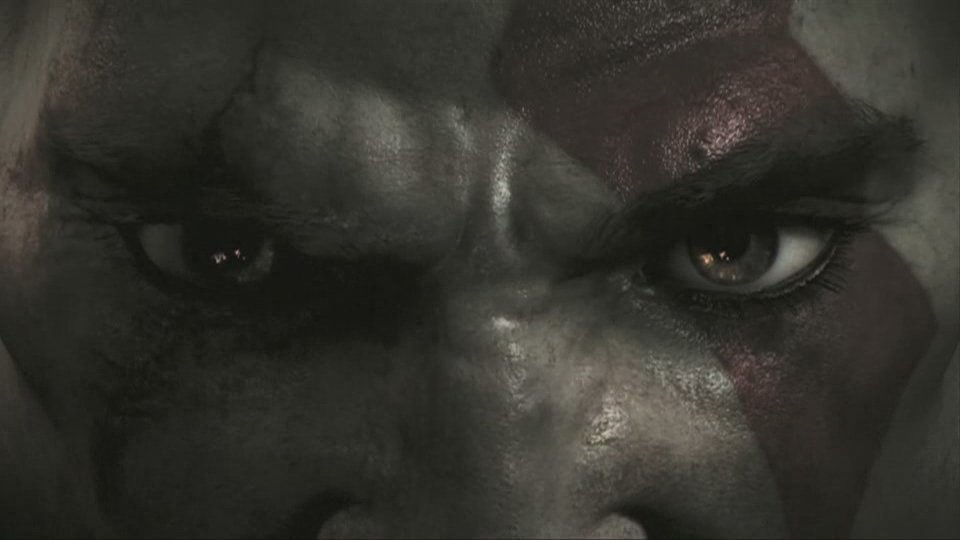
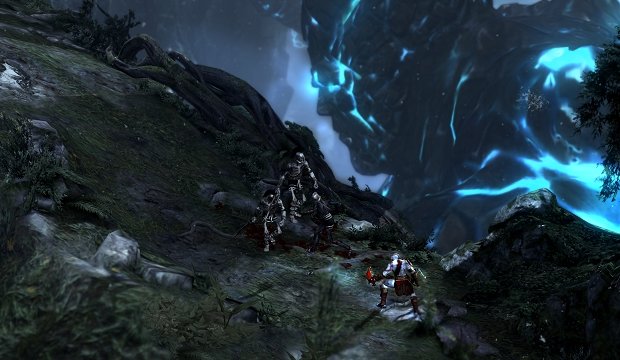
    After hitting start on the now-classic, half-of-Kratos’s head title screen, God of War III starts, literally, exactly where God of War II left off. With the goal of attacking Mt. Olympus and the gods themselves, Kratos finds himself on the back of Gaia, as she and her fellow titans are scaling the side of a massive cliff.

    In a gorgeous cutscene that is rendered in real-time (you are not ready!), Zeus and a few select gods (boss battles later in the game, perhaps?) stand at the edge of the grand temple and observe the titans climbing Mt. Olympus.

    Immediately, Zeus orders some of his guards to jump from the temple onto the back of the titans in hope of stalling their progress.

    At this point the playable game begins.
    The first 30 minutes of God of War III

    The camera swoops down from the heavens onto the moving, stone- and tree-covered arm of Gaia. On it, Kratos is perched, massive sword in hand, ready to do battle.

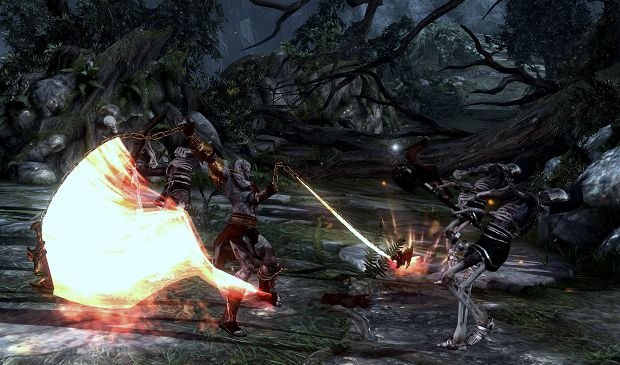
    For fans of the series, the immediate good news is that God of War III on the PlayStation 3 controls and feels exactly like the God of War games of the past. And that is most definitely a good thing. Without any hesitation, I was performing killer combos on the hordes of guards, blood and experience orbs flying everywhere.

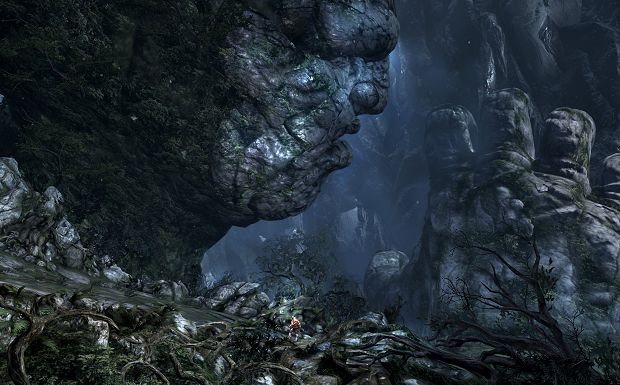
    While the initial tutorial battle with a handful of guards commences, the action happening on-screen all around Kratos is out of control. Since you are on the back of a huge, moving titan, the ground under Kratos is constantly moving. In the background, all of Gaia’s body realistically sways just out of focus. Even cooler, the other titans scattered around the cliffs can be seen ascending the mountain. Really, there is so much eye candy to stare at that it is almost too much to handle.
    The first 30 minutes of God of War III

    After defeating all the guards, Kratos moves forward by raising a tree that has bent over Gaia’s arm, blocking his path.

    At this point a new cutscene begins. Back in Zeus’s temple, the god Poseidon steps forward and dives off the top of the mountain. As he falls, he thrusts his entire body into a climbing titan, knocking it and Poseidon into the water below.

    After a huge splash, the water turns into a giant whirlpool.

    And then it happens.

    From the whirlpool, a huge water snake with the head of a horse and crazy crab legs shoots out. The water snake grabs a hold of Gaia, pulling her down off the mountain. Gaia holds on, refusing to let go.

    Immediately after grabbing Gaia, multiple water snakes emerge from the whirlpool, each one taking hold of a different titan.

    Then the action switches back to Kratos and the player takes control again.

    It’s hard to explain without seeing it in action, but you really have no idea how good the graphics are in this upcoming sequence. As Kratos moves around on Gaia’s arm, Poseidon’s water snakes are swirling around everywhere in the background. The camera spins around, showing all the attacking titans while Kratos battles multiple incoming enemies.

    It is ridiculously epic.

    As he moves forward, Gaia’s arm suddenly shifts and one of the water snakes jumps in front of Kratos, wrapping itself around Gaia’s arm.

    Enter the first boss battle. Well, the first stage of the first boss battle (again, you are not ready).
    The first 30 minutes of God of War III

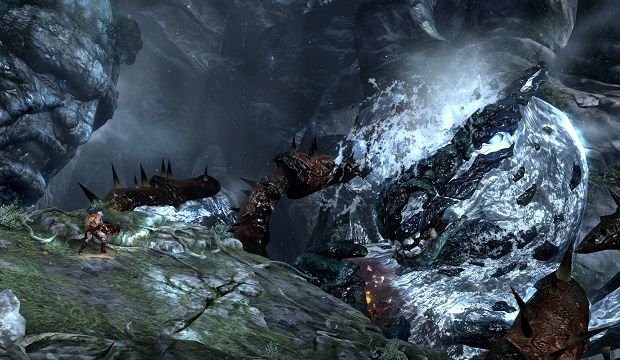
    At this point Kratos must attack the huge water snake, dodging attacks from both his horse head and crazy crab arms. Once his energy is depleted, something amazingly cool happens.

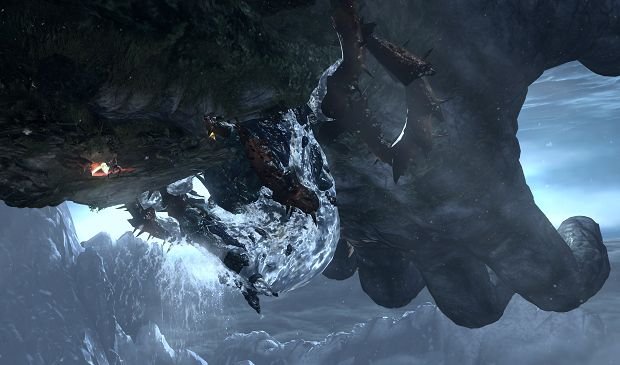
    The water snake shifts and twists Gaia’s arm. With this, the entire screen spins around, throwing Kratos underneath Gaia’s arm. Hanging on for dear life, Kratos must now battle the coiled water snake while hanging from under Gaia’s constantly moving arm. It is OUT OF CONTROL COOL!
    The first 30 minutes of God of War III

    This dance continues in many different positions. As the arm spins around, Kratos finds himself alternating between standing straight, hanging below, and even clutching to the side of Gaia’s arm.

    After a long battle, Kratos gets the water snake’s energy low enough to perform his legendary context-sensitive QTE finishing move. Here is a good time to mention an improvement that God of War III implements that helps things dramatically! In the two previous God of War games, QTE symbols would be in the middle of the screen, displaying whatever button needs to be quickly pressed on the PlayStation controller. It worked great, but sometimes the reaction time was so short it was hard to hit the buttons quickly enough.

    In God of War III, the on-screen prompts actually appear in a section of the screen related to where the corresponding buttons are placed on the actual PlayStation controller. Meaning: the “circle” symbol will appear on the right side of the screen, the “X” on the bottom, the “square” on the left, and so on and so on. This sounds really minor, but it helps so much and allows you to not miss the incredible visuals by concentrating too hard on one area of the screen. It’s a brilliant (if subtle) improvement.

    Once he finishes off the water snake, Kratos is thrown to the side of Mt. Olympus. What follows is a lengthy level full of platforming, fighting, and puzzle-solving: all the classic elements of a great God of War game. The twist is, while traversing through the inner and outer workings of Mt. Olympus, Kratos has to deal with battling the many different water snakes at different points. The entire sequence is very similar to the opening Colossus of Rhodes battle in God of War II … but much more visually stunning (you are not ready!).

    After making it through the level (which includes a gorgeous sidetrack through Gaia’s heart), Kratos is confronted with fighting one final water snake.
    The first 30 minutes of God of War III

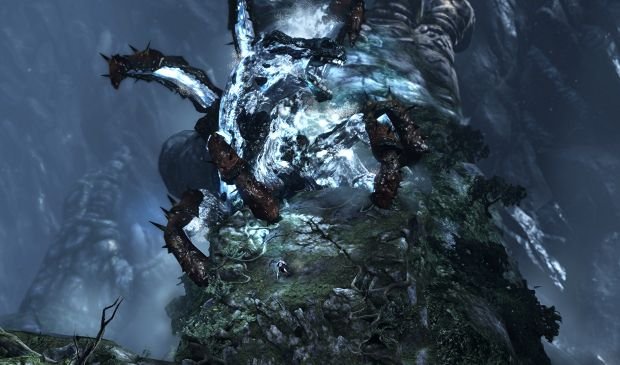
    But this is no ordinary water snake. As the snake coils around Gaia, trying its best to pull the stubborn, strong Gaia off the cliff, it reveals itself to be only a small piece of the main boss: the god Poseidon.

    That’s right; all the water snakes are only the tentacles of Poseidon, who has grown enormous in size.

    Kratos stands in front of Poseidon — all in real-time and completely playable, mind you — as the titans move all around him. Gaia struggles to stay on the cliff and screams in agony as the water tentacles start to rip her apart.

    The battle with Poseidon begins and, I will tell right now, it is one of the most ridiculously over-the-top, awesomely designed boss battles I have ever played.

    Basically, Kratos has to fight Poseidon on many different stages and levels. There are sections where he has to swing his sword and blades while dodging attacks; there are sections where Kratos has to jump around as Gaia moves and twists below him; there are even sections where Kratos swings all around Poseidon with his grappling hook, flying through the sky like he has wings (it is unbelievably cool), all of this ending in a wildly satisfying finishing move.

    But that is not the best of it. Right before I was asked to stop playing in fear of revealing too much, the coolest part of the opening sequence presented itself.

    Once the giant Poseidon is defeated, he becomes small again and Kratos knocks him to his knees on the cliffs of Olympus. At this point, Kratos basically beats Poseidon to death using a series of QTE moves. But here is the kicker: all of this happens FROM POSEIDON’S POV. The uncomfortably long beating sequence is shot entirely through the eyes of Poseidon. It is out of control. Like, seriously out of control.

    And even though I have explained everything in detail, I will keep the very last QTE move you perform secret. You need to experience it yourself without it being spoiled to fully experience its impact. It is just as clever as it is shockingly violent.

    So, yeah. That was it. After defeating Poseidon, my play time came to an end and I walked away unbelievably impressed. The look on face for the entire 30 minutes was priceless. My mouth was hanging open the entire time. I think I even let out a few audible gasps and “woahs.”

    At first glance, God of War III does nothing new. It really feels exactly like the other two games in the series. But the core mechanics in God of War are so great, changing too much would be a bad idea.

    But that doesn’t mean everything is the same! Obviously, the game is a huge step up visually from the previous games, displaying the best graphics I have ever seen in a videogame — yup, even better than Uncharted 2. And the few new mechanics I saw implemented in the first 30 minutes of the game are original enough to feel fresh, but not too different to feel awkward.

    Basically, the first 30 minutes I played were perfect. Absolutely perfect. The graphics were jaw-dropping; the gameplay was solid and already addictive; and there were more “holy sh*t!” moments in the opening sequence than some games have in their entireties.

    Obviously I recommend God of War III to anyone who owns a PlayStation 3. If you own a PS3, there is no excuse to not pick this up when it is released on March 16th. Heck, even if you don’t own a PS3, get the game anyway! I bet even holding the box would be a cool experience.

    Even though I only got to play the first 30 minutes of the game, I can say with confidence that God of War III is going to offer an unforgettable experience — easily one of the best this generation.

    You are not ready.

    + by Chad Concelmo – destructoid
  • Heavy Rain Game Review [Spoiler free]


    Heavy Rain Review

    Almost immediately upon seeing the first available footage of Heavy Rain, I knew Quantic Dream was on to something special, and that I wanted in. Based on their previous effort, Indigo Prophecy, it was clear that this game wasn’t going to fall under any previous pretenses of what a video game was. Even the developers themselves were quick to assert that this was an experience more akin to an interactive movie than it was a video game. Despite the fact that it doesn’t have as much in common with Gears of War and Uncharted as those two have with each other, that doesn’t mean Heavy Rain can’t be a great game. After finishing Heavy Rain, it’s clear that Quantic Dream’s Heavy Rain is more than a game; it’s an experience.

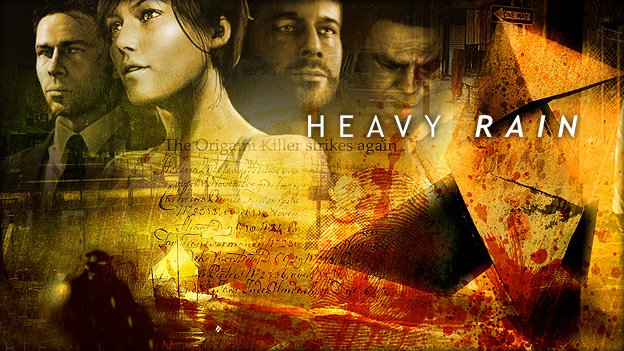
    Heavy Rain is an epic story about four people trying to catch a serial murderer with a predilection for children and weeklong rainstorms, known as the Origami Killer. The narrative is told from the point of view of an FBI agent named Norman Jayden, an photojournalist named Madison Paige, a shamus named Scott Shelby, and the father of the most recently abducted child, Ethan Mars. All four characters have their own agendas, but how they play out relies solely on your input. Each of the characters has the building blocks for a few different types of personalities, and it’s up to you to put the pieces together to create a fully fleshed out character. If you want Norman Jayden to be a completely by-the-books government agent, or the type of man who flies off the handle at the drop of a pin, you can do that. If you want Scott Shelby to be a cranky old ex-cop, or a genuinely compassionate man, you can do that. You can have any character be a combination of a multitude of emotions and attitudes. Quantic Dream has put a ton of varied decisions into each second of a character’s story, and every single decision you make affects not only how your story plays out, but also what type of person each of the characters will be by the end of the game. That is, if they survive the experience.

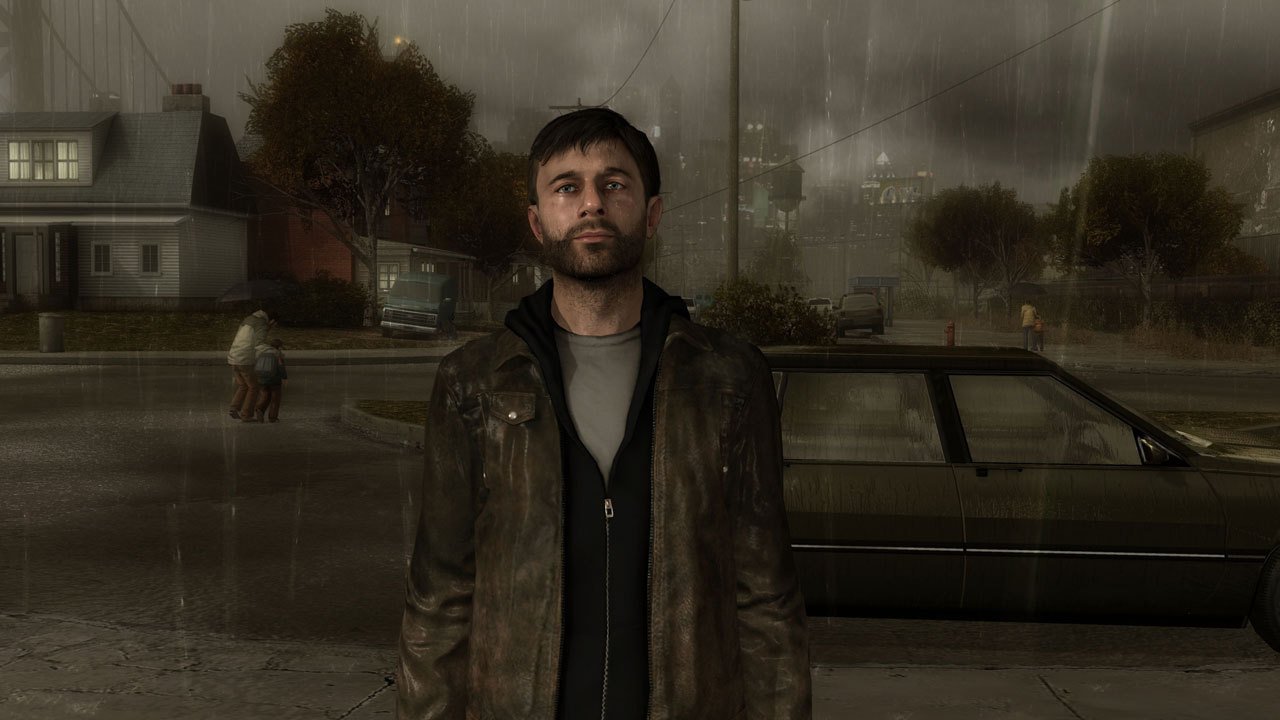
    Ethan Mars: A broken man, mourning father.

    It’s no secret that at any point in the game, you may lose a character permanently without getting a “Game Over” screen. During a play, it’s fairly obvious where these sections of the game are, and you’re likely to try extra hard not to fail because that’s the way you’ve always played games. Nobody wants to lose. In Heavy Rain, losing is actually encouraged. Not doing everything properly actually makes the game more interesting. It’s going to be difficult for many people to wrap their heads around not reloading a checkpoint or save immediately upon screwing something up, but if you can grasp Quantic’s concept of letting the game play out solely on your first impulsive responses, the experience becomes that much richer. Of course it would be great to see the game completed perfectly, but there are so many choices and alternate paths in the game, it’s almost impossible to discern what the proper path is right up until the end of the game, and even then it’s not 100% clear if you did everything right or not.

    Now, there are times when the game won’t let you fail, and you must complete a task in order to proceed. While I can understand the need for moments like these to happen, it sort of takes a bit away from the whole “every decision is yours” aspect of the game. You almost never get the feeling that you’re in control of your character’s destiny or motivation in a video game today. Even other games that have tried to incorporate moral decisions still end almost identically, with the only difference being what powers you’re able to obtain during a playthrough. With Heavy Rain, Quantic Dream did such a phenomenal job making sure you are in total control for so much of the game, you almost forget that someone put those decisions in there for you. These unchangeable portions of the game remind you that you’re playing a game that someone else designed, and it’s a shame because you’re immediately pulled from the immersion. It doesn’t ruin the game one bit, but these segments do feel oddly out of place. There are also some decidedly boring segments of the game where you’ll have to do everyday tasks like set the table or buckle your seat belt, but despite how frequently they happen, they are brief, and you’ll be so drawn into the wonderfully woven tapestry of the mystery at hand you won’t mind for one second the monotonousness of every day life in a video game.

    Aside from the very different way in which Heavy Rain tells its story, the controls may be the most divisive element of the game. Heavy Rain has very little in common with other games when it comes to its control scheme. For the most part, every interaction you have with your environment is context sensitive. If you want to open a door, you’ll have to move the right analog stick according to the prompt on screen. If you want to brush your teeth or dry off after getting out of the shower, you’ll have to shake the Sixaxis controller in the right direction. More complex tasks, like carrying groceries, sneaking up on people, or traversing muddy inclines, requires you to hold a series of buttons down in succession, and though it can feel cumbersome, is actually not that bad of a way to relate the action on screen with what a player is doing with their hands. Pretty much everything you interact with outside of the game’s few action sequences relies on these context sensitive controls. At first, it does feel a bit weird, particularly during the opening sequences for each of the characters, but after a little while, everything feels natural. It’s almost like you realize, “Yes, this is what the motion would be if I was going to take sunglasses out of my jacket, and put them on.” From then on, the game’s non-action controls become almost second nature. Well, almost. Walking is an absolute disaster. Simply holding down R2 causes your character to start walking in the direction they’re facing. As long as you have a clear path, this isn’t a problem. However, the moment you start making quick turns, or need to navigate a crowded area, your character controls like a Jell-O tank. How they were able to get so much right in the control department, but make the simple task of walking one of the most frustrating elements of the game, is a mystery to me. If you’re able to overlook this shortcoming, you’ll be pleasantly surprised by what the rest of the game has to offer.

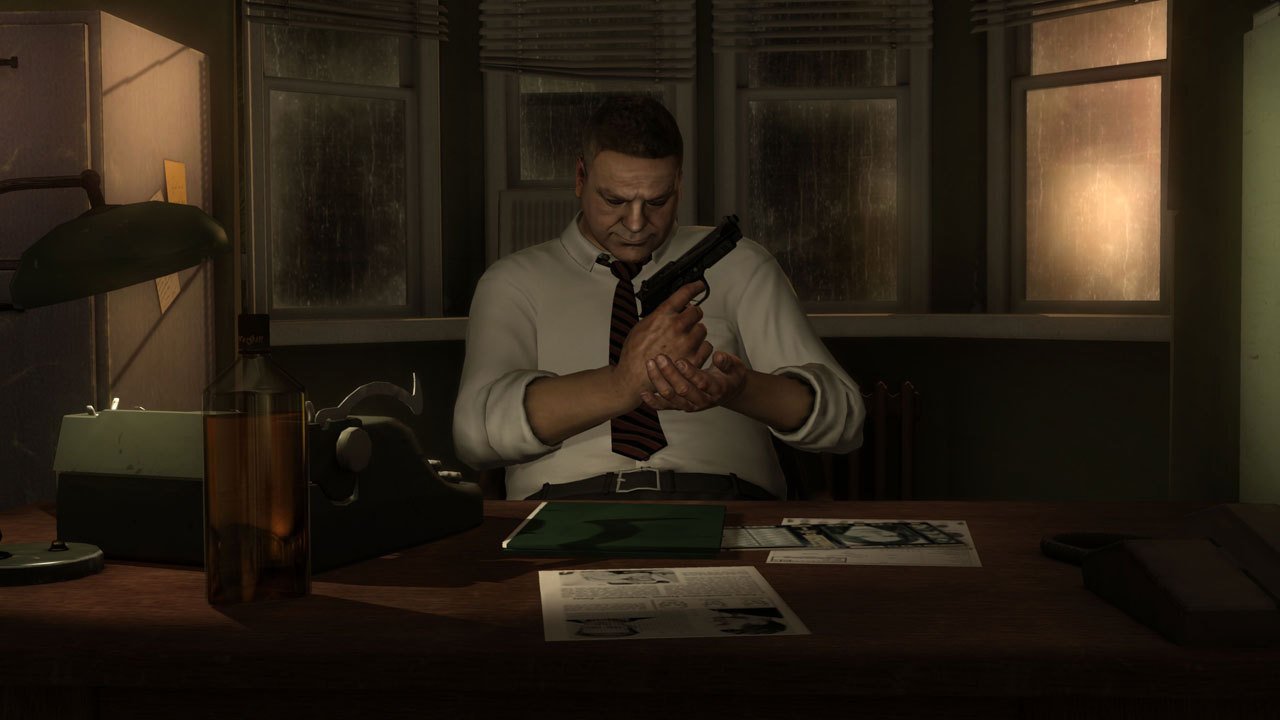
    The persuasive private detective Scott Shelby

    The game’s action moments revolve solely around quick time events, and even though they’re typically a tired and overused gaming convention at this point, they actually make a great deal of sense in the context of the game. Early on, it’s actually pretty hard to fail these moments, but as you progress deeper into the mystery of the Origami Killer, these instances become much more frantic, difficult, and engaging. The longer you play, the more attached you become to these characters. You already have it engrained in your head that you’re supposed to win in order to beat the game, but when you become as involved with a set of characters as you do with the four in this game, you will want to see them survive any obstacle. The great thing about the QTEs in this game is that even they are branching. If you don’t hit a button fast enough, it’s only likely to cause a brief change in the way the scene is currently playing out. Missing more adds to the likelihood of the result not being in your favor, and could result in the death of a character. How these sequences unravel can also be influenced by what your character is thinking at a particular moment. Throughout the game, you can hold down L2 to see what your character is pondering at a given instance. There will often be multiple thoughts racing through his or her head, and it’s up to you to decide the train of thought. While it may not sound like the most interesting of gameplay elements, putting doubt or confidence through into your character’s head can dramatically impact the way everything in a particular section plays out.

    If you’ve seen one trailer or picture from this game at all, you know that Quantic Dream is pushing the envelope graphically, and that they’re closing the distance between what gaming hardware is able to do and the uncanny valley. The characters you play as in this game, as well as the ones you directly interact with, are stunningly lifelike, and are among the best we’ve ever seen. When put up against even the most impressive of its contemporaries, like Uncharted 2 or Mass Effect 2, the only place in which Heavy Rain can’t compete is in environments and tertiary characters. For the most part, everything is animated superbly, but as stated before, walking is one sore spot that should have been addressed, especially considering just how much walking all these characters do. Every single person walks the exact same way, and they all learned to walk from the Ministry of Silly Walks. Again, how everything else could be so good, yet walking, which is one of the most basic tasks a human being can perform, is so pathetic, escapes me. The voice talent is pretty damn impressive, particularly when you have to consider not just how many different lines have to have been read, but the different inflections for different emotional states as well. Sometimes a character does come across as reading from a script, but those instances are rare, and hardly a reason to condemn the complete package. Heavy Rain’s score manages to be haunting and beautiful at the same time, and other games would do well to take note of how well the game’s music accentuates the story instead of being tacked on as an afterthought.

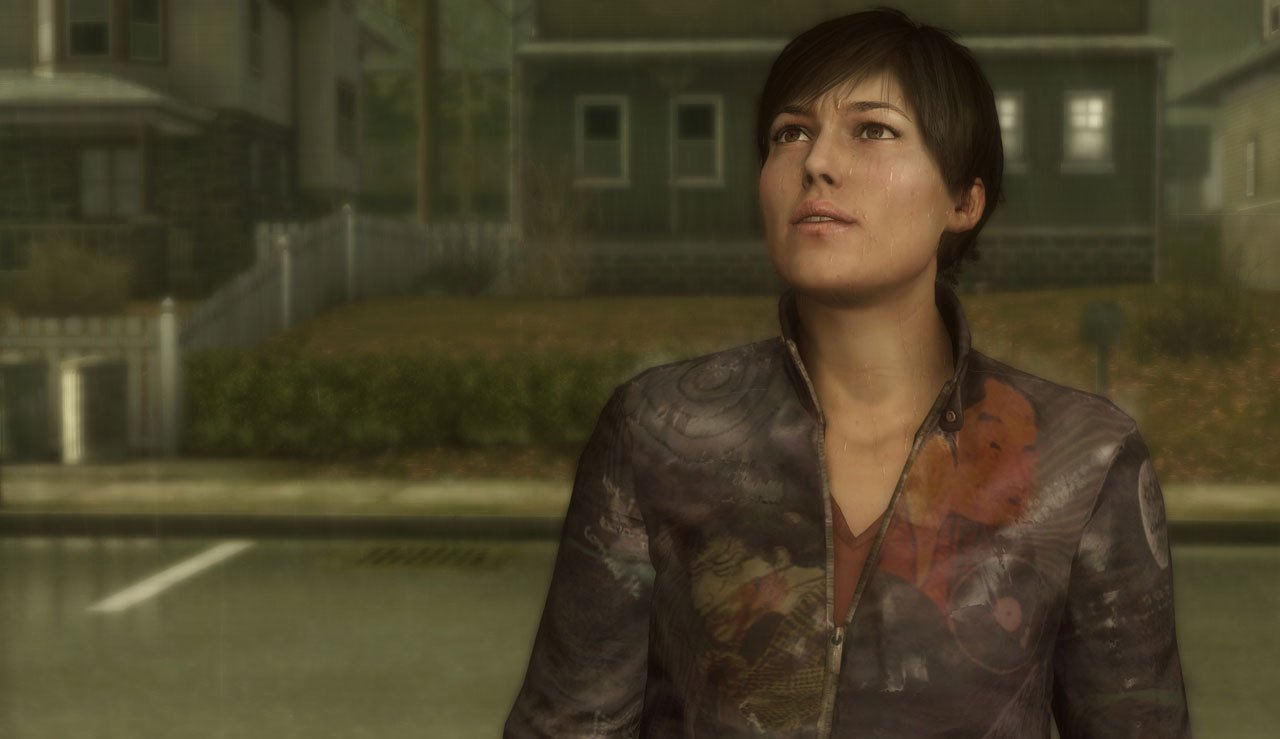
    The alluring photo-journalist Madison Paige

    Heavy Rain is going to be one of the most polarizing games of the year, if not the next few. There’s so much here that is beyond what we typically expect in a video game. Unfortunately, some people may not be able see beyond the fact that there isn’t much gameplay here aside from quick time events and context sensitive interactions. Those that do will find an experience well worth the effort of completing multiple times to see how the game plays out from every possible angle. In a year already filled with amazingly quality titles, and about a dozen more coming in the next few months, Heavy Rain can be added to the list without question. Where games go from here is going to be up to the audience that plays this game. Quantic Dream puts forth some truly incredible ideas and concepts as to what a game can be, but they’ll stay ideas and concepts until gamers are willing to accept that they deserve more than another GTA or Call of Duty clone. Heavy Rain is without a doubt one of the most impressive games of the last five years, and it shouldn’t be missed by anyone. It’s just a shame not everyone will have a chance to enjoy what the title offers.

    – Source: by Gamervision