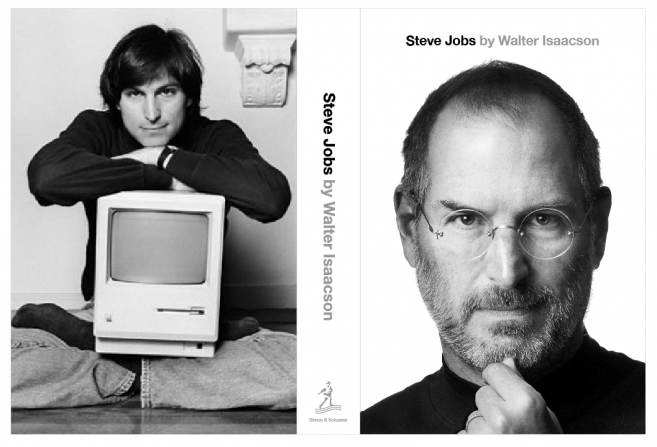
• Steve Jobs Resigns as CEO from Apple, Becomes Chairman. Tim Cook Becomes CEO


    After founding Apple 35 years ago in his garage in Silicon Valley, and after being pushed out, Jobs was brought back in in 1997 and in the 14 years since his return, Apple has turned into the most valuable company in the world.

    After successions of medical leaves, Steve Jobs will quit as CEO and becomes Chairman. As Chairman, Jobs will “continue to serve Apple with his unique insights, creativity and inspiration,” said Apple Board member Art Levinson.  Tim Cook is the new CEO as per the Apple succession plan.

    The Resignation letter:

    To the Apple Board of Directors and the Apple Community:

    I have always said if there ever came a day when I could no longer meet my duties and expectations as Apple’s CEO, I would be the first to let you know. Unfortunately, that day has come.

    I hereby resign as CEO of Apple. I would like to serve, if the Board sees fit, as Chairman of the Board, director and Apple employee.

    As far as my successor goes, I strongly recommend that we execute our succession plan and name Tim Cook as CEO of Apple.

    I believe Apple”s brightest and most innovative days are ahead of it. And I look forward to watching and contributing to its success in a new role.

    I have made some of the best friends of my life at Apple, and I thank you all for the many years of being able to work alongside you.

    Steve

    CUPERTINO, Calif.–(BUSINESS WIRE)– Apple’s Board of Directors today announced that Steve Jobs has resigned as Chief Executive Officer, and the Board has named Tim Cook, previously Apple’s Chief Operating Officer, as the company’s new CEO. Jobs has been elected Chairman of the Board and Cook will join the Board, effective immediately.

    “Steve’s extraordinary vision and leadership saved Apple and guided it to its position as the world’s most innovative and valuable technology company,” said Art Levinson, Chairman of Genentech, on behalf of Apple’s Board. “Steve has made countless contributions to Apple’s success, and he has attracted and inspired Apple’s immensely creative employees and world class executive team. In his new role as Chairman of the Board, Steve will continue to serve Apple with his unique insights, creativity and inspiration.”

    “The Board has complete confidence that Tim is the right person to be our next CEO,” added Levinson. “Tim’s 13 years of service to Apple have been marked by outstanding performance, and he has demonstrated remarkable talent and sound judgment in everything he does.”

    Jobs submitted his resignation to the Board today and strongly recommended that the Board implement its succession plan and name Tim Cook as CEO.

    As COO, Cook was previously responsible for all of the company’s worldwide sales and operations, including end-to-end management of Apple’s supply chain, sales activities, and service and support in all markets and countries. He also headed Apple’s Macintosh division and played a key role in the continued development of strategic reseller and supplier relationships, ensuring flexibility in response to an increasingly demanding marketplace.

    Apple designs Macs, the best personal computers in the world, along with OS X, iLife, iWork and professional software. Apple leads the digital music revolution with its iPods and iTunes online store. Apple has reinvented the mobile phone with its revolutionary iPhone and App Store, and has recently introduced iPad 2 which is defining the future of mobile media and computing devices.

    [via reuters]

  • iPad 2 Runs WebOS Twice as fast as HP TouchPad


    Hewlett-Packard engineers hacked iPad 2 to install webOS only to find out Apple’s hardware runs their mobile operating system more than twice as fast compared to their own TouchPad hardware, according to The Next Web:

    The hardware reportedly stopped the team from innovating beyond certain points because it was slow and imposed constraints, which was highlighted when webOS was loaded on to Apple’s iPad device and found to run the platform significantly faster than the device for which it was originally developed.

    It should be pointed out that webOS  runs on single core Qualcomm ARM chips while iPad 2 runs on dual core Samsung silicon.

    With a focus on web technologies, webOS could be deployed in the iPad’s Mobile Safari browser as a web-app; this produced similar results, with it running many times faster in the browser than it did on the TouchPad.

    TNW also details how the news went down within HP.

    Almost everyone at HP found out about the death of the TouchPad and Pre hardware as the public did, in the press release. Only the top executives knew anything about this decision and even senior staff as high as Ari Jaaksi, the Vice President of webOS software, didn’t know about the shuttering of hardware before it happened.

    After the press release came out, there was a company wide meeting filled with a bunch of ‘corporate speak’, in which staff were told that they were going to be in limbo for 3-4 weeks.

  • Google to Acquire Motorola for $12.5 Billion


    Google and Motorola Mobility have just announced an agreement whereby Google will acquire Motorola for $12.5 billion (or $40 per share).

    The acquisition of Motorola Mobility, a dedicated Android partner, will enable Google to supercharge the Android ecosystem and will enhance competition in mobile computing. Motorola Mobility will remain a licensee of Android and Android will remain open. Google will run Motorola Mobility as a separate business.

    Full press release below:

    Google to Acquire Motorola Mobility

    Combination will Supercharge Android, Enhance Competition, and Offer Wonderful User Experiences

    MOUNTAIN VIEW, Calif. & LIBERTYVILLE, Ill.–(BUSINESS WIRE)–Google Inc. (NASDAQ: GOOG) and Motorola Mobility Holdings, Inc. (NYSE: MMI) today announced that they have entered into a definitive agreement under which Google will acquire Motorola Mobility for $40.00 per share in cash, or a total of about $12.5 billion, a premium of 63% to the closing price of Motorola Mobility shares on Friday, August 12, 2011. The transaction was unanimously approved by the boards of directors of both companies.

    “Motorola Mobility’s total commitment to Android has created a natural fit for our two companies. Together, we will create amazing user experiences that supercharge the entire Android ecosystem for the benefit of consumers, partners and developers. I look forward to welcoming Motorolans to our family of Googlers.”

    The acquisition of Motorola Mobility, a dedicated Android partner, will enable Google to supercharge the Android ecosystem and will enhance competition in mobile computing. Motorola Mobility will remain a licensee of Android and Android will remain open. Google will run Motorola Mobility as a separate business.

    Larry Page, CEO of Google, said, “Motorola Mobility’s total commitment to Android has created a natural fit for our two companies. Together, we will create amazing user experiences that supercharge the entire Android ecosystem for the benefit of consumers, partners and developers. I look forward to welcoming Motorolans to our family of Googlers.”

    Sanjay Jha, CEO of Motorola Mobility, said, “This transaction offers significant value for Motorola Mobility’s stockholders and provides compelling new opportunities for our employees, customers, and partners around the world. We have shared a productive partnership with Google to advance the Android platform, and now through this combination we will be able to do even more to innovate and deliver outstanding mobility solutions across our mobile devices and home businesses.”

    Andy Rubin, Senior Vice President of Mobile at Google, said, “We expect that this combination will enable us to break new ground for the Android ecosystem. However, our vision for Android is unchanged and Google remains firmly committed to Android as an open platform and a vibrant open source community. We will continue to work with all of our valued Android partners to develop and distribute innovative Android-powered devices.”

    The transaction is subject to customary closing conditions, including the receipt of regulatory approvals in the US, the European Union and other jurisdictions, and the approval of Motorola Mobility’s stockholders. The transaction is expected to close by the end of 2011 or early 2012.

  • TSMC Begins Testing Apple’s A6 Processor with 28-nanometer Technology


    Taiwan Economic News is reporting that local Taiwan Semiconductor Manufacturing Co., Ltd. (TSMC), the world’s largest semiconductor foundry by market shares now, has started trial production of the A6 processor in cooperation with Apple Inc., with the production design to be taped out in the first quarter of next year and scheduled to be publicly unveiled in the second quarter at the earliest, according to industry sources.

    TSMC has applied its newest 28-nanometer process and 3D stacking technologies to produce the next-generation processor A6, which is based on the ARM architecture and will undergo TSMC’s cutting-edge silicon interposer and bump on trace (BOT) methodologies. Industry insiders said that the manufacturing will help to pump considerable momentum into TSMC’s business growth starting next year, though the company has yet to comment on the deal for the moment.

    We already reported that Apple and TSMC have begun testing in July, however, both reports suggest that the next iPad 3 could be the first to sport the new processor in 2012.

    Let us wait and see how this will affect Samsung as Apple keen to shift most of production away from the korean company as Samsung has emerged as Apple’s toughest competitor in the smartphone and tablet market.