• Try Out Windows Phone on Your iPhone or Android Right Now


    Windows Phone on Your iPhone

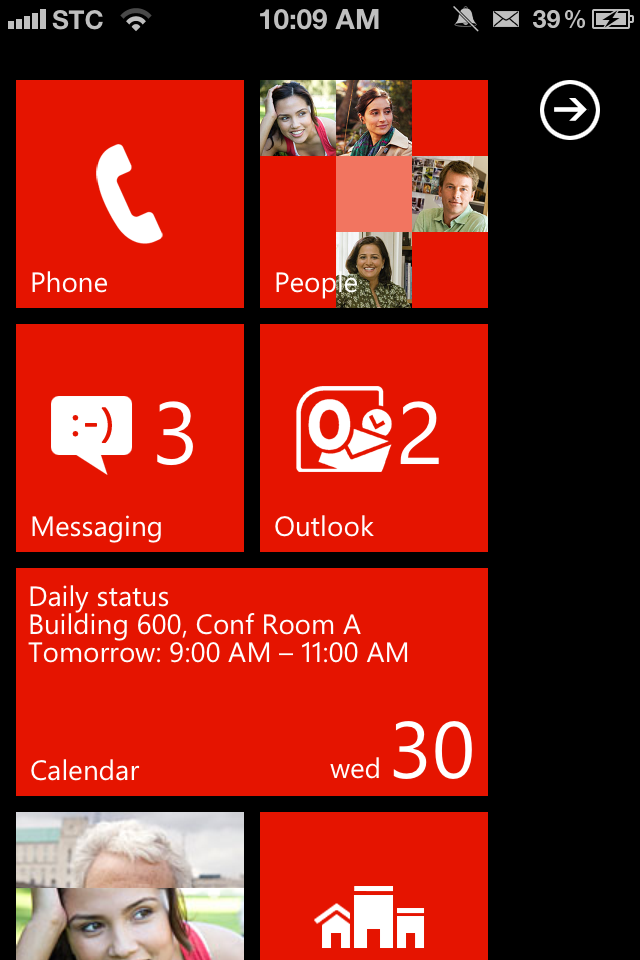
    if you are eager to see how Windows Phone feels? Microsoft has just made it easy for you. They released a new HTML 5 website that allows iPhone and Android users to get a taste of the Windows Phone 7, Mango 7.5 operating system.

    Browse to the webpage http://aka.ms/wpdemo on your mobile device to try it out right away. To enjoy full screen experience, you can save the page to your home screen by clicking on the bookmark button.

    The demo gives a comprehensive look at some features you find in Windows Phone with a blue dot to guide you around the operating system.

    Ironically, the demo doesn’t work in Windows Phone’s own browser. I guess it doesn’t really have to, but funny none the less.

    [via Gizmodo]

  • Android Malware Has Increased 472% Since July


    In a report by the Juniper Global Threat Center has found that Android malware has increased by 472% since July of this year. They also pointed out that this October and November were the months that showed the fastest growth of mobile malware on Android ever.

    Android malware increases

    Juniper’s report includes 400% increase in Android malware from 2009 to the summer of 2010. In August, detected malware samples increased by 10%, then by 18% in September. October saw a 110% increase on top of the previous month, and November has so far seen a 111% increase. Check out the infographic below

    By comparing to Apple’s App Store, the open-ended nature of the latter, as well as the lack of any code-signing and checking process in Google’s Market are to be blamed.

    “These days, it seems all you need is a developer account, that is relatively easy to anonymize, pay $25 and you can post your applications,” wrote Juniper in its report. “With no upfront review process, no one checking to see that your application does what it says, just the world’s largest majority of smartphone users skimming past your application’s description page with whatever description of the application the developer chooses to include.”

    As mentioned by Appleinsider, an August report from McAfee found that Android had become the most-targeted platform for malware while iOS was untouched.

    In addition to an increase in the volume, the attackers continue to become more sophisticated in the malware they write. For instance, in the early spring, we began seeing Android malware that was capable of leveraging one of several platform vulnerabilities that allowed malware to gain root access on the device, in the background, and then install additional packages to the device to extend the functionality of the malware.

    In addition to this, 55% of threats are spyware-based attacks that send private data and take control of devices, while 44% are trojans that send text messages to services that charge the user.

    Is this a valid reason for users to opt for iOS devices. What do you think?

  • Siri Protocol Cracked


    Siri

    It seems the guys over at Applidium have managed to get Siri’s protocol cracked, this actually opens the door to all sorts of possibilities letting Siri to, potentially, be ported to various apps and devices including iPad, Android devices or other third-party apps.

    Apple has already gone into some detail of how Siri works. Basically it works by communicating with Apple’s remote servers, the speech you feed you iPhone 4S is sent, deciphered by the servers and then bounces it back to your handset.

    Today, we managed to crack open Siri’s protocol. As a result, we are able to use Siri’s recognition engine from any device. Yes, that means anyone could now write an Android app that uses the real Siri! Or use Siri on an iPad! And we’re going to share this know-how with you.

    But there is one little snag to this in that the Apple servers need an identifier key called a UDID associated to an iPhone 4S model only to get Siri work.

  • Google and Samsung Delay Nexus Prime Launch Due to Steve Jobs Mourning


    Google and Samsung announce that the Galaxy Nexus, a.k.a the Nexus Prime, will not launch at the Mobile Unpacked conference October 12 next Wednesday, as expected and teased.

    Google and Samsung “just felt it was the wrong time to hold a launch event, as the world continues mourning Jobs”:

    The decision to postpone things was made late last night at the top levels of both companies, sources said, with Jobs’ death being the reason. There are no delays with the product itself, sources insisted.

    Samsung and Google later updated their original press statement, which now reads:

    We believe this is not the right time to announce a new product as the world expresses tribute to Steve Jobs’s passing.

    They are likely to make an announcement on the launch late next week.  The new Google phone is built by Samsung and is rumored to have a 4.65-inch, 720P display with dual core 1.5GHz Samsung processor, NFC, 1GB of RAM and runs over Android Ice Cream Sandwich. It will likely be one of the stronger competitors for iPhone 4S.