• Google Reveals Project Glass, HUD in Your Eyeglasses


    Google Reveals Project Glass, HUD in Your Eyeglasses

    Google Reveals Project Glass, HUD in Your Eyeglasses

    Google finally revealed Project Glass, an augmented-reality experiment with HUD interface in an eyeglass-like frame that brings the Internet to a small screen above the right eye, the gadget streams data to the wearer’s eyes in real time. You can watch the demo video below showing what you can expect from wearing such gadget from the perspective of someone wearing the glasses, receiving up-to-the-minute updates as information streamed into his glasses:

    Google X Labs, which incubated Project Glass, is starting to see the light of day. We first saw the driver-less car and now Project X experience that was exclusive to Sci-Fi movies. Here is what Google had to say about the experiment:

    We think technology should work for you—to be there when you need it and get out of your way when you don’t.

    A group of us from Google[x] started Project Glass to build this kind of technology, one that helps you explore and share your world, putting you back in the moment. We’re sharing this information now because we want to start a conversation and learn from your valuable input. So we took a few design photos to show what this technology could look like and created a video to demonstrate what it might enable you to do.

    Is a HUD interface with such type of user experience anything you may be interested in or you don’t need more distractions?

  • iPad’s A5X Benchmarked Against Nvidia’s Tegra 3


    iPad’s A5X Against Nvidia’s Tegra 3

    iPad’s A5X Against Nvidia’s Tegra 3

    During the new iPad announcement Apple’s VP Phil Schiller made it clear that Apple’s new A5X chip was much faster than the latest Nvidia’s Tegra 3 chipset. which believed to be the cutting edge of mobile technology.

    Australian tech blogger Ritchie has put the claim to the test by doing a side-by-side video comparison of the new iPad and the Tegra 3-powered ASUS Transformer Prime.

    The results, while not as dramatic as Apple’s claims of 4 times the graphics processing power of the Tegra 3, do show conclusively that the A5X chip that sports dual-core CPU and quad-core GPU trounces the quad-core, 12-core graphics Tegra 3. Apple once again showing that raw specifications don’t necessarily make for a better experience.

    Watch the results for yourself below:

    [via TUAW]

  • The new iPad 3rd-generation Teardown


    The new iPad 3rd-generation Teardown

    The new iPad 3rd-generation Teardown

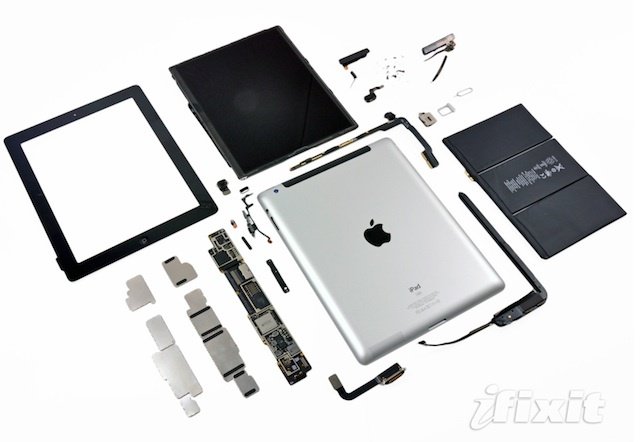
    The guys at iFixit have managed to get their hands on the new iPad to tear it down and reveal its guts, here are the entire specs of the new iPad.

    • Dual-core Apple A5X processor with integrated quad-core graphics
    • 9.7 inch LED backlit in-plane switching LCD with 2048×1536 pixel “Retina Display.” The tested unit is made by Samsung; Sharp and LG may be supplying panels as well.
    • 16, 32 or 64 GB Toshiba NAND flash memory
    • 5 MP HD rear-facing camera
    • 1 GB DRAM comprised of two 4Gb Elpida LP DDR2 parts
    • Broadcom BCM4330 802.11a/b/g/n Baseband/Radio with Integrated Bluetooth 4.0+HS
    • Qualcomm MDM9600 3G and 4G wireless modem
    • Qualcomm RTR8600 multi-band/mode RF transceiver for LTE bands
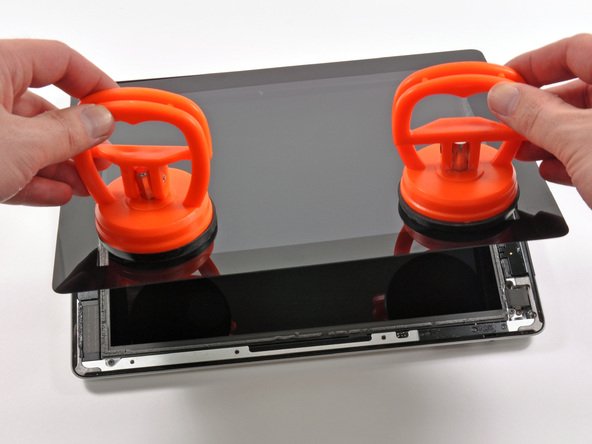
    Using suction cups to lift the panel

    Using suction cups to lift the panel

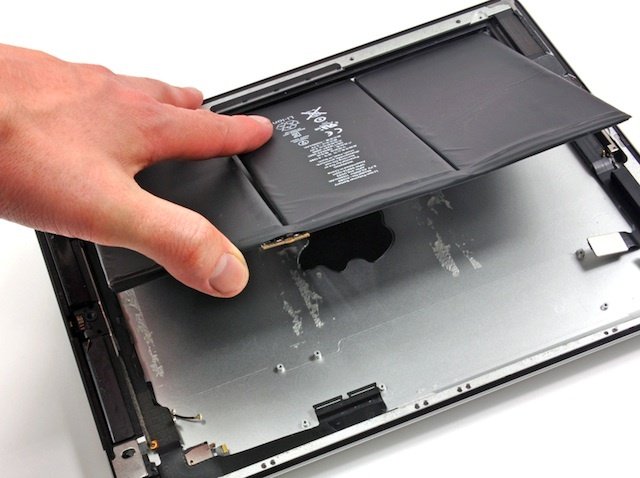
    The new iPad battery

    The new iPad battery

    Getting inside the iPad was a tough job as expected, the front panel was glued to the frame. But using a heat gun and some heavy duty suction cups did the trick.

  • Heavy Rain’s Dev Quantic Dream Introducing New Real Time Tech Demo: Kara


    New Real Time Tech Demo: Kara

    New Real Time Tech Demo: Kara

    The footage you are going to see was created by Heavy Rain developer Quantic Dream. It’s not a pre-rendered cutscene but made entirely in real time. CEO and founder David Cage showcased the studio’s new tech at GDC on the PlayStation 3.

    Quantic Dream

    Quantic Dream

    Kara Demo was created by the the studio’s new engine and according to Eurogamer:

    Kara‘s not just the product of new tech and a better understanding of the PlayStation 3’s architecture – she’s also the result of a new approach to motion capture at Quantic Dreams, and an investment in the more sophisticated techniques that have become the norm in Hollywood’s CG industry as the studio moves across to using full-performance capture.

    David Cage had this to say about Kara and what they are trying to accomplish,

    What we call full-performance capture is shooting the body, the voice and face at the same time. Most studios right now in the game industry use what we call split performance, which means you shoot the face and voice on one side and then you use the body, and not in one take

    It works okay – there have been some great games made using this process, and Heavy Rain was done this way. But we felt that if we wanted more emotion, and more performance from the actor we needed to have everything from the same take, and we needed to shoot everything at the same time.

    So we invested a lot in our motion capture studio. Heavy Rain was shot with 28 cameras, and we’ve upgraded the studio to 65 cameras. Now we can shoot several actors – their body and their face – at the same time. It’s not a small change, but at the same time this is how Avatar and Tintin were shot, and it’s how the CG industry works because they know how much you gain from shooting face, voice and body at the same time.

    Kara voice performed by Valorie Curry. Watch the clip, and tell us what you think: