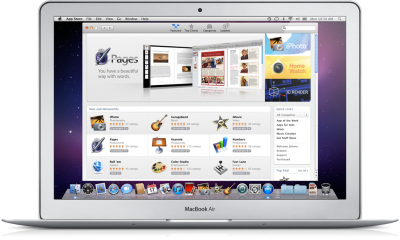
Mac App Store
January
* Mac App Store opens for business
* Apple introduces the iPad 2.0 — faster, thinner, new cameras, shipping “by April”.
* Apple reports Q1 results — confirm huge Mac sales growth, stellar iPad sales and extremely strong iPhone statistics.
* iWork 11 makes App Store debut.
* News Corp. ships ‘The Daily’ magazine
February
* Aperture upgraded
* First million apps downloaded from Mac App Store, iWork and a variety of free gaming apps see huge success.
* iAds spring partners unveiled, though Apple skips discussion of revenue.
* iTunes update brings TV show streaming and subscription services. Cable company shares take a dive.
March
* iPhone hits Verizon
* White iPhone ships, but supplies deeply constrained
* iBookstore update brings the Web to books
* iBookstore/iTunes Extra title creation tool revealed, will this be part of future iLife suite?
April
* Apple upgrades MacBook Pro range, some models lose optical drives and gain SSD as standard. “We said this is where mobile computing is going, we still believe this,” says Jobs.
* Apple reports Q2 results
* iPad 2.0 hits retail for the first time, over a million sold on day one.
* Final Cut Studio upgrade is 64-bit and integrates powerful iAd and virtual environment creation features.
* iMac update now ships with Magic Trackpad as standard.
May
* iPad 2.0 achieves six million sales in first two months.
* Logic Studio upgrade ships, now offers additional features for live performance mixing, including automated level controls for live desk recording.
June
* Steve Jobs keynotes WWDC
* iPhone 5 debuts at WWDC
* WWDC sees beta release of OS X Lion to developers.
* Safari 6 offers improved Flash support — Flash now an optional extra.
* OpenJDK Project announces first fully-tested public beta of Java for OS X Lion and Snow Leopard systems.
* iOS 5 offers plethora of features, including new mapping and location-sensing tools. Apple focuses its pitch on easy-to-use and understand privacy controls for location and usage information.
July
* iPhone 5, iPad 2.0 reaches new countries
* Apple reports Q3 results
* Apple desktop products upgraded, now ship with Magic Trackpad as standard. Mac Pro now boasts LightPeak connectivity.
August
* Apple hosts special music event, introduces new products which ship in September (see below).
* Apple introduces Android emulator for iPhone, “There’s some good apps on Android, now iPhone users can run them on their iPhone, unless they use Flash,” says Jobs.
* Hell freezes over, iTunes app lets Android users purchase music from their favorite music store.
September
* iTunes 11 ships, offers cloud-based music locker service. “We’ve been working on this for a while,” admits Steve Jobs as he introduces the service.
* New iPod touch ships, chassis is more like the iPhone 4, capacity increased.
* iPod nano replaced by iPhone nano, worn like a watch and equipped with an A4 processor and the capacity for voice calls, this smaller cheaper iPhone is feature-limited but lets you Tweet, Facebook and email on the move.
* iPod classic gets speed bump.
* Apple TV gains latest (A5?) processor.
October
* Mac OS X ‘Lion’ ships
* iOS 5.1 debuts, extends iOS/OS X integration.
* iLife 12 appears, equipped with additional ‘cloud’-based features this is the first version of iLife to be made available exclusively via the App Store.
* Apple reports Q4 results.
November
* iOS 5.2 upgrade ships
December
* App Store downloads now reach 5 billion
* Mac App Store downloads reach 100 million
* Apple confirms 5 million iPhone nano sales, cuts price for Christmas market.
[via: computerworld]