• iPhone 5 Production Begins in September With “Lite” Version Possible As Well


    Apple’s next-generation iPhone should go into production as early as September, according to one analyst in news first reported by BusinessInsider. This would mean the iPhone 5 wouldn’t hit stores until later this year, or early in 2012. But, could it come along with a smaller model?

    According to a note released today, Avian Securities states:

    “Supporting out comments over the last month, conversations with yet another key component supplier indicates that production for iPhone-5 will begin in September. This is consistent with Avian findings in the supply chain in recent months and we believe the consensus view is moving towards this scenario. “

    Perhaps more surprisingly, Avian believes Apple is also working on a lower-spec/lower-priced iPhone model too.

    They state:

    “As a reminder, Avian has uncovered several data-points in recent months pointing to the existence of a lower-spec/lower-price iPhone. A lower-spec/lower-price iPhone has also been speculated in the press and gadget blogs, though we do not believe consensus currently discounts the existence of such a model.”

    Lots of stories emerged in recent weeks, indicating the iPhone 5 will not make it at this June’s WWDC event. however, we are waiting for more speculations.

  • New Fuji Mountain Wallpaper in Mac OS X Lion Hints at Future Retina Displays Mac


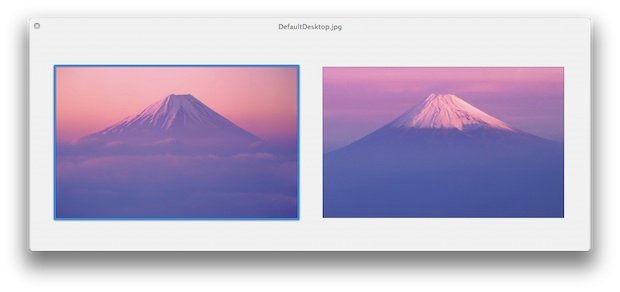
    The new default wallpaper on OS X 10.7 Lion Developer Preview 2 featuring Fuji Mountain has a whopping size of 3200×2000 pixels as noted by the guys at osxdaily.com.

    Click here to download the full version, [3200×2000 pixels.]

    However, 3200×2000 pixels is significantly larger than any existing resolution offered by Apple displays, including the 27″ and 30″ Apple Cinema Displays. Furthermore, the default wallpaper size in Mac OS X 10.6 is 2560×1600, which is exactly the maximum resolution of Apple’s 30″ Cinema Display. Is it just coincidence that Apple is bundling an ultra high resolution image in Lion as the new default wallpaper, or does this suggest that higher resolution Macs, possibly with retina displays, are coming sometime in the future?

    Here’s a nice chart that shows what screen size at what viewing distance with that resolution would be considered a retina display:
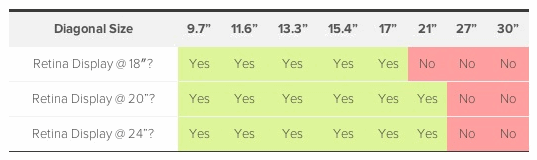
    Notice that even for the closest viewing distance of 18 inches, a 3200 x 2000 resolution represents a Retina Display for display sizes up to and including 17 inches. And of course, that covers the entire range of Apple laptops on the market today.

    And smaller displays wouldn’t need a resolution that high to be considered retina:

    A 13.3” MacBook Air, for example, would need a screen providing approximately 2200 x 1375 pixels (191 dpi) to be considered a Retina Display at an 18-inch viewing distance.

    To help understand what a “Retina Display” means. Steve Jobs, at the announcement of the iPhone 4, had this description:

    It turns out there’s a magic number right around 300 pixels per inch, that when you hold something around to 10 to 12 inches away from your eyes, is the limit of the human retina to differentiate the pixels.

    Other than providing dramatically improved display clarity on a Mac, the other reason a Mac with a 3200×2000 pixel resolution makes sense is for iOS developers. So what does this have to do with iPad 3?

    … according to an analyst cited by AppleInsider, the high resolution retina display will come to iPad 3 in the form of a whopping 2048×1536 resolution display. If this happens, you’d expect similar displays to come to the Mac platform so that developers can accurately produce and test apps for the ultrahigh resolution.

    Indeed, 3200×2000 would be such an ultrahigh resolution for a Mac, and it would be more than adequate to develop for a 2048×1536 pixel iPad 3 display.

    Sure, this is speculation based on a new wallpaper in a developer preview OS, but who knows what Apple is prepping for us.

  • iPad 2 Expected 2.6 Million Units Shipped in March?


    According to Digitimes, Apple shipped between 2.4 and 2.6 million iPads during the month of March. Shipments are set to nearly double during the second quarter, according to a conservative estimate by a source:

    Sales of iPad 2 are running at a rate faster than its predecessor, and Apple took delivery of 2.4-2.6 million units in March. Apple is likely to take delivery of 4-4.3 million units a month, or a total of over 12 million units, of iPad 2 tablets in the second quarter, said the sources.

    Apple is likely to take delivery of 4-4.3 million units a month, or a total of over 12 million units, of iPad 2 tablets in the second quarter, said the sources.

    Taiwan-based TPK Touch Solutions, G-Tech Optoelectronics, HannStar Display, Chunghwa Picture Tubes (CPT), Wintek and other touch panel makers are all expanding or looking to expand their manufacturing capacities in the wake of strong iPad 2 sales.

  • Sony CEO Reveals Apple’s Plans for 8MP iPhone 5 Camera


    Reports emerged on late Friday that, during an interview with The Wall Street Journal’s Walt Mossberg, Sony CEO Howard Stringer had accidentally confirmed that a Sony camera sensor plant in Japan had been damaged by last month’s earthquake, delaying shipments of sensors to Apple. which sets the idea of plans to supply an eight-megapixel camera for Apple’s next-generation iPhone.

    However, Sony does not currently provide image sensors to Apple, prompting speculation that the electronics giant could be set to provide a higher-resolution camera for the next iPhone. OmniVision has been Apple’s camera supplier for the 5-megapixel camera on the iPhone 4 and the 3.2-megapixel sensor for the iPhone 3GS.

    In February, an analyst claimed that OmniVision would be unable to produce an eight-megapixel sensor in time for the launch of the next iPhone and that Sony would step in to for at least the first wave of orders.

    According to the report, Sony’s eight-megapixel sensor, which is used in the Sony Ericsson Xperia Neo, would suit Apple’s needs because it has a CMOS sensor for low light situations.