• Gulliver’s Travels to be One Giant Apple Ad


    Gulliver’s Travels

    The upcoming Jack Black comedy, Gulliver’s Travels, which opens Christmas Day, will be one giant Apple ad.

    When Gulliver travels to Lilliput, he brings his iPhone, which when used by the Lilliputians appears gigantic.

    The movie has multiple MacBooks and other Apple products, and Apple logos galore.

    Apple is easily the most successful company ever in getting its products into movies and TV shows. Some 41% of the movies that hit number-one at the box office featured Apple products.

    Part of the reason for this success is that Hollywood is Apple-obsessed. Another is that Apple works at it. The company proudly boasts that it never pays for product placement. But it’s likely that there is some string pulling, proactive offers of devices to use and other actions that are kept secret by the company.

    Whatever Apple is doing, it’s working.

    [via: cultofmac]
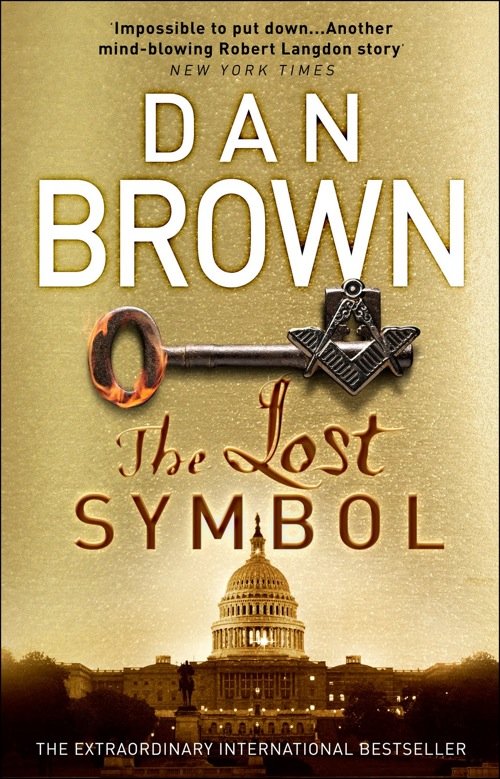
  • Dan Brown writing the script for the upcoming THE LOST SYMBOL Movie


    The Lost Symbol

    Mega-selling mystery author Dan Brown has taken over writing duties on the film adaptation of The Lost Symbol.

    Columbia Pictures is developing the film version of Brown’s most recent novel, which was published in 2009 and sold more than a million copies in its first day on shelves. In it, Brown’s regular protagonist, Harvard symbologist Robert Langdon, gets mixed up with the Freemasons in Washington, D.C.

    The 2006 adaptation of The Da Vinci Code and the 2009 version of Angels & Demons grossed $1.24 billion at the worldwide box office for Sony. But this is the first time Brown has taken on screenwriting duties. Akiva Goldsman penned Da Vinci and co-wrote Demons with David Koepp.

    Oscar-nominated Eastern Promises scribe Steven Knight first took a run at the Symbol screenplay. Although Ron Howard and Brian Grazer’s Imagine Entertainment is once again producing, Howard, who directed the first two Brown adaptations, has not committed to directing Symbol. Nor has star Tom Hanks officially come on board to reprise Langdon.

    Regardless, given the sure-thing built-in audience, Sony is sure to have Symbol in theaters sooner rather than later. With Men in Black III and the Spider-Man reboot already set for summer 2012, here’s betting that Brown’s latest is on screens the following summer.

    [via: THR]

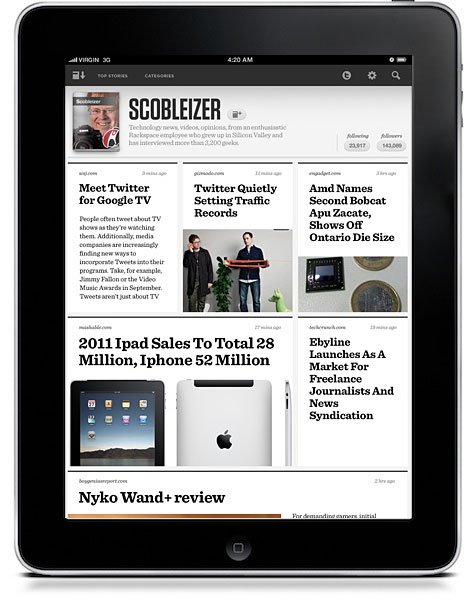
  • Twitter Just Got Its Most Beautiful iPad App! TweetMag


    TweetMag

    TweetMag is, without a doubt, the most beautiful Twitter app that ever landed on the iPad. Yes, TweetMag is more attractive than Flipboard.

    TweetMag revolves around a simple idea: every user, list or search can become a tweetmag. Instead of allowing you to select the people you follow and tell the app “hey, let’s make a magazine out of this stream”, TweetMag is capable of converting almost any kind of Twitter stream into an app-optimized digital magazine. A tweetmag stands out because of its attention to typography, great use of whitespace, elegant layout and the way it (magically) displays content by relevance. [Link 4.99$]

  • Apple 3D patent details glasses-free display projection


    Apple has patented a 3D display system that requires neither special glasses or parallax screens, and which will supposedly enable “inexpensive auto-stereoscopic 3D displays that allow the observer complete and unencumbered freedom of movement.” The system would instead use a combination of eye-tracking and a special, reflective display that would monitor the position of the user and bounce the image from a projector so as to split 3D content for the left and right eye.

    Apple 3D Patent Display

    Apple describes the special display involved as “a projection screen having a predetermined angularly-responsive reflective surface function,” which basically means that the angle of light reflection from different points on the screen would be predicable enough for a computer to bounce light with individual eye accuracy. It’s unclear whether Apple’s system would be able to support more than one simultaneous viewer, or indeed what computational requirements such a setup might demand.

    The application was filed back in 2006, and of course there’s no guarantee that Apple ever intends to produce 3D-capable hardware using the technology it covers.

    [via CNET]