• Simple Questions for Google Regarding Chrome’s Dropping of H.264


    Google Chrome

    Regarding Google’s stated explanation for dropping H.264 support in Chrome:

    Though H.264 plays an important role in video, as our goal is to enable open innovation, support for the codec will be removed and our resources directed towards completely open codec technologies.

    These changes will occur in the next couple months but we are announcing them now to give content publishers and developers using HTML an opportunity to make any necessary changes to their sites.

    1. In addition to supporting H.264, Chrome currently bundles an embedded version of Adobe’s closed source and proprietary Flash Player plugin. If H.264 support is being removed to “enable open innovation”, will Flash Player support be dropped as well? If not, why?
    2. Android currently supports H.264. Will this support be removed from Android? If not, why not?
    3. YouTube uses H.264 to encode video. Presumably, YouTube will be re-encoding its entire library using WebM. When this happens, will YouTube’s support for H.264 be dropped, to “enable open innovation”? If not, why not?
    4. Do you expect companies like Netflix, Amazon, Vimeo, Major League Baseball, and anyone else who currently streams H.264 to dual-encode all of their video using WebM? If not, how will Chrome users watch this content other than by resorting to Flash Player’s support for H.264 playback?
    5. Who is happy about this?

    [via: daringfireball]

  • Apple’s busy diary for 2011


    Mac App Store

    January

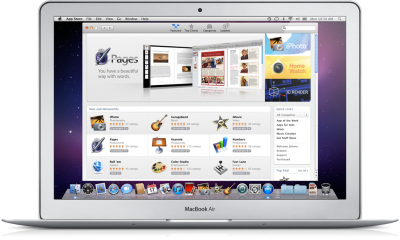
    * Mac App Store opens for business
    * Apple introduces the iPad 2.0 — faster, thinner, new cameras, shipping “by April”.
    * Apple reports Q1 results — confirm huge Mac sales growth, stellar iPad sales and extremely strong iPhone statistics.
    * iWork 11 makes App Store debut.
    * News Corp. ships ‘The Daily’ magazine

    February

    * Aperture upgraded
    * First million apps downloaded from Mac App Store, iWork and a variety of free gaming apps see huge success.
    * iAds spring partners unveiled, though Apple skips discussion of revenue.
    * iTunes update brings TV show streaming and subscription services. Cable company shares take a dive.

    March

    * iPhone hits Verizon
    * White iPhone ships, but supplies deeply constrained
    * iBookstore update brings the Web to books
    * iBookstore/iTunes Extra title creation tool revealed, will this be part of future iLife suite?

    April

    * Apple upgrades MacBook Pro range, some models lose optical drives and gain SSD as standard. “We said this is where mobile computing is going, we still believe this,” says Jobs.
    * Apple reports Q2 results
    * iPad 2.0 hits retail for the first time, over a million sold on day one.
    * Final Cut Studio upgrade is 64-bit and integrates powerful iAd and virtual environment creation features.
    * iMac update now ships with Magic Trackpad as standard.

    May

    * iPad 2.0 achieves six million sales in first two months.
    * Logic Studio upgrade ships, now offers additional features for live performance mixing, including automated level controls for live desk recording.

    June

    * Steve Jobs keynotes WWDC
    * iPhone 5 debuts at WWDC
    * WWDC sees beta release of OS X Lion to developers.
    * Safari 6 offers improved Flash support — Flash now an optional extra.
    * OpenJDK Project announces first fully-tested public beta of Java for OS X Lion and Snow Leopard systems.
    * iOS 5 offers plethora of features, including new mapping and location-sensing tools. Apple focuses its pitch on easy-to-use and understand privacy controls for location and usage information.

    July

    * iPhone 5, iPad 2.0 reaches new countries
    * Apple reports Q3 results
    * Apple desktop products upgraded, now ship with Magic Trackpad as standard. Mac Pro now boasts LightPeak connectivity.

    August

    * Apple hosts special music event, introduces new products which ship in September (see below).
    * Apple introduces Android emulator for iPhone, “There’s some good apps on Android, now iPhone users can run them on their iPhone, unless they use Flash,” says Jobs.
    * Hell freezes over, iTunes app lets Android users purchase music from their favorite music store.

    September

    * iTunes 11 ships, offers cloud-based music locker service. “We’ve been working on this for a while,” admits Steve Jobs as he introduces the service.
    * New iPod touch ships, chassis is more like the iPhone 4, capacity increased.
    * iPod nano replaced by iPhone nano, worn like a watch and equipped with an A4 processor and the capacity for voice calls, this smaller cheaper iPhone is feature-limited but lets you Tweet, Facebook and email on the move.
    * iPod classic gets speed bump.
    * Apple TV gains latest (A5?) processor.

    October

    * Mac OS X ‘Lion’ ships
    * iOS 5.1 debuts, extends iOS/OS X integration.
    * iLife 12 appears, equipped with additional ‘cloud’-based features this is the first version of iLife to be made available exclusively via the App Store.
    * Apple reports Q4 results.

    November

    * iOS 5.2 upgrade ships

    December

    * App Store downloads now reach 5 billion
    * Mac App Store downloads reach 100 million
    * Apple confirms 5 million iPhone nano sales, cuts price for Christmas market.

    [via: computerworld]
  • The Henley Tilt-Shift Sequence from THE SOCIAL NETWORK


    xvxcvxc

    Read what David Fincher had to say about the scene, check it out directly below and watch the scene again after that.

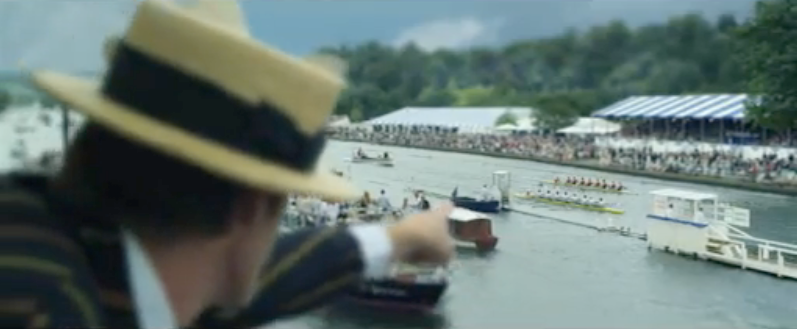
    “The Henley Royal Regatta were incredibly good to us and they allowed us to actually shoot the race at Henley. I had no idea how huge the Henley Royal Regatta was. I’d only seen photographs and a lot of them are telephoto so you don’t get the idea of this mile-and-a-half of grandstands and corporate sponsors. I mean, it’s a huge thing and we originally thought we would shoot a bunch of inserts on the Charles [River] and then use that footage to intercut with wide shots we’d shot at Henley.

    “The trick of this scene, and the thing that made it so difficult was, it’s not like the fight in Rocky where it’s been talked about forever and it’s importance has been established and you know what it means to the Winklevosses. You get dropped into the middle of this race, and I joked with Aaron [Sorkin] about it a lot, ‘How do I make people care about whether or not these guys win or lose a race that we don’t know where it is, we don’t know what it means?’ And he was like, ‘Well that’s your problem.’ [laughing]

    “He was using it as a way of saying, ‘You miss by that much.’ Then to have the Winklevosses miss by that much with Mark Zuckerberg, they missed by that much with Larry Summers, they’re missing by that much at Henley and it’s the final straw.

    “But it is a tricky thing to design a sequence around missing by that much when you literally get dropped into the middle of it. You really don’t know where you are, it requires a subtitle to tell you you’re now in Henley for the Henley Royal Regatta, which you probably don’t know is the Super Bowl of boat racing.

    “So this was one of those sequences where the only time we could shoot it was July 4, 2010. It was literally five to six weeks before we had to finish the movie. The movie had to be done so we could get it in theaters, and they were incredibly helpful to us and made it all possible.

    “We’d shot the post-Henley scene where they hear about Facebook, but the actual race itself was literally a one-minute-and-forty-second slug. I think when we showed the film to the New York Film Festival, where we showed the film to a lot of long-lead press it had a card that just said, ‘Incredibly involving and thrilling sequence at Henley Royal Regatta,’ that was it just a black card with white type on it. So when we finally got to shoot the scene it was a mad scramble to finish it.

    “One of the reasons it was done in this faux, swing and tilt– tilting lens board style was because all of the close-ups of the Winklevosses and the Dutch rowing were done in Eton on a man made lake that doesn’t look anything like Henley. Doesn’t have any– just has green grass, but we would shoot the close-ups of all the people and then we had to matte in still photographs that we’d shot at Henley.

    “There was a team of 20-35 artists who toiled around the clock to finish that sequence so we could get it out and get the movie done. And they did a great job.”

  • RANGO Redefines How Animated Films Are Made


    Rango

    This is how animated movies are made: The writers and artists break a story, they storyboard it, they write it, they bring in the actors. The actors stand alone in booths and record dialog. All by themselves. They’ll be video taped so the animators can get a look at their facial expressions. Then the writers and animators redo the entire story and bring the actors back to stand around in booths some more.

    That is not how Gore Verbinski did it on Rango, if the embedded featurette is to be believed. And I say ‘if’ because I can’t think of another modern animated film that was made this way – Verbinski had the actors work together and act out the scenes on a big stage. There must have been a secondary voice capture process, I assume. Was the playful acting thing something they did at the start, while storyboarding the film, or was this how it was all done, in lieu of motion capture?

    Also, what accent does Johnny Depp have these days?