• Peter Jackson to Shoot THE HOBBIT in 3D Using RED EPIC Camera


    Hobbits on Red Epics

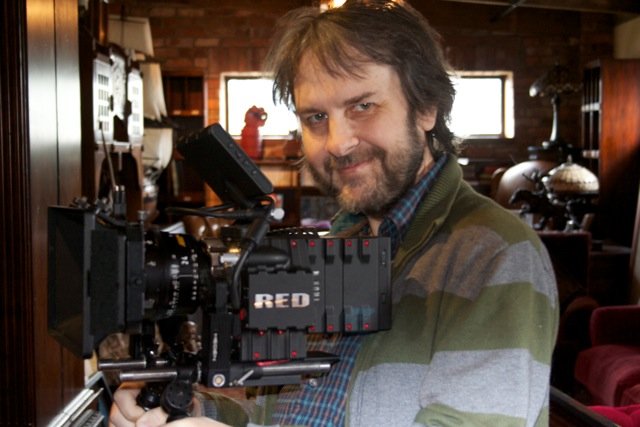
    Peter Jackson’s two film adaptation of The Hobbit will be shot in 3D using RED DIGITAL CINEMA’S soon to be released EPIC Digital Cameras.

    The successor to RED’s industry changing RED ONE, the EPIC has 5K resolution, can shoot up to 120 frames per second and has a new HDRx™™ mode for the highest dynamic range of any digital cinema camera ever made. Taking everything they had learned from building their first camera, RED designed the EPIC from scratch and have produced a smaller, lighter camera that is an order of magnitude more powerful.

    The Hobbit will be amongst the first productions in the world to use the EPIC and at least thirty cameras will be required by the 3-D production. The EPIC’S small size and relatively low weight, makes it perfect for 3-D – where two cameras have to be mounted on each 3D rig.

    Jackson has a long history with RED, dating back to when he directed the short film ‘Crossing the Line’ as a very early test of prototype RED ONE cameras.

    “I have always liked the look of Red footage.” he says, “I’m not a scientist or mathematician, but the image Red produces has a much more filmic feel than most of the other digital formats. I find the picture quality appealing and attractive, and with the Epic, Jim and his team have gone even further. It is a fantastic tool, the Epic not only has cutting edge technology, incredible resolution and visual quality, but it is also a very practical tool for film makers. Many competing digital systems require the cameras to be tethered to large cumbersome VTR machines. The Epic gives us back the ability to be totally cable free, even when working in stereo.”

    Jim Jannard the owner and founder of RED flew to New Zealand earlier this year with members of his team so that Jackson could test the EPIC and assess its suitability. “Everybody at RED is incredibly proud that Peter has chosen the Epic” says Jannard, “The Hobbit is a major production, and could have chosen any camera system that they wanted. The fact that they went with us is extremely gratifying.”

    The Hobbit will start shooting in New Zealand early next year.

    + Source: RED

  • Disney’s All 50 Animated Feature Films Trailer


    Bambi

    Celebrating their 50th feature release “Tangled”. Disney have brought out a brand new trailer showing all 50 of their animated features and if you love Disney movies, then you’ll really love this!

    Check out the trailer below or scroll down to view every single movie featured in the trailer.

    The movies in the trailer include:

    1. Snow White and the Seven Dwarfs 1937
    2. Pinocchio 1940
    3. Fantasia 1940
    4. Dumbo 1941
    5. Bambi 1942
    6. Saludos Amigos 1942
    7. The Three Caballeros 1944
    8. Make Mine Music, 1946
    9. Fun and Fancy Free 1947
    10. Melody Time 1948
    11. The Adventures of Ichabod and Mr. Toad 1949
    12. Cinderella 1950
    13. Alice in Wonderland 1951
    14. Peter Pan 1953
    15. Lady and the Tramp 1955
    16. Sleeping Beauty 1959
    17. One Hundred and One Dalmatians 1961
    18. The Sword in the Stone 1963
    19. The Jungle Book 1967
    20. The Aristocats 1970
    21. Robin Hood 1973
    22. The Many Adventures of Winnie the Pooh 1977
    23. The Rescuers 1977
    24. The Fox and the Hound 1981
    25. The Black Cauldron 1985
    26. The Great Mouse Detective 1986
    27. Oliver & Company 1988
    28. The Little Mermaid 1989
    29. The Rescuers Down Under 1990
    30. Beauty and the Beast 1991
    31. Aladdin 1992
    32. The Lion King 1994
    33. Pocahontas 1995
    34. The Hunchback of Notre Dame 1996
    35. Hercules 1997
    36. Mulan 1998
    37. Tarzan 1999
    38. Fantasia 2000 1999
    39. Dinosaur 2000
    40. The Emperor’s New Groove 2000
    41. Atlantis: The Lost Empire 2001
    42. Lilo & Stitch 2002
    43. Treasure Planet 2002
    44. Brother Bear 2003
    45. Home on the Range 2004
    46. Chicken Little 2005
    47. Meet the Robinsons 2007
    48. Bolt 2008
    49. The Princess and the Frog 2009
    50. Tangled 2010

  • MGM Officially Files for Chapter 11 Bankruptcy


    MGM

    Metro-Goldwyn-Mayer Inc. (“MGM”) today announced that it and approximately 160 of its affiliates have filed Chapter 11 cases in the U.S. Bankruptcy Court for the Southern District of New York (the “Court”) to seek confirmation of their “pre-packaged” plan of reorganization (“Plan”).

    MGM has sufficient cash on hand, and the consent of its lenders to use this cash, to fund normal business operations throughout the Chapter 11 process. MGM has filed “first-day” motions seeking immediate Court approval to continue paying its employees, vendors, participants, guilds and licensors in the ordinary course of business during the entire Chapter 11 process, for both pre-petition and post-petition obligations. MGM anticipates that the Plan will be confirmed by the Court in approximately 30 days.

    As previously announced on October 29, 2010, MGM’s secured lenders, voting in the Company’s solicitation process, overwhelmingly approved the proposed plan of reorganization. After considering a range of strategic alternatives over the course of the last 15 months, MGM and its secured lenders determined this plan will allow the Company to emerge as a stable enterprise with new leadership at the helm to move MGM forward.

    The Plan provides for the Company’s secured lenders to exchange more than $4 billion in outstanding debt for most of the equity in MGM upon its emergence from Chapter 11.

    Following the receipt of the requisite consents from its lenders for the Plan, the Company and certain significant consenting debt holders continued efforts to reach agreement with several affiliates of Carl Icahn, which directly or indirectly hold significant MGM debt, regarding the Icahn entities’ support of the Plan. The Company, several Icahn entities, and certain significant consenting debt holders reached agreement regarding certain immaterial modifications to the transaction documents that are exhibits to the Plan. Subject to Bankruptcy Court approval, the transaction documents will be modified with respect to certain corporate governance provisions and to eliminate the contribution of assets by Cypress and Garoge, two affiliates of Gary Barber and Roger Birnbaum, and the receipt of stock in reorganized MGM by these entities. Based on these modifications, Mr. Icahn will support the Company’s Plan. Under the Plan, Messrs. Barber and Birnbaum, currently co-Chairman and Chief Executive Officer of Spyglass Entertainment, will serve as co-Chief Executive Officer of MGM Holdings Inc. and as co-Chairman and co-Chief Executive Officer of the primary operating subsidiary of MGM Holdings Inc. In addition, Messrs. Barber and Birnbaum will serve as members of the board of directors of MGM Holdings Inc., along with seven lender appointees, including several independent directors.

    “For many months, we have been working with our lenders to explore the strategic options available to MGM to improve MGM’s financial position and maximize the Company’s value,” said Co-Chief Executive Officer Steve Cooper. “By sharply reducing MGM’s debt load and providing access to new capital, the proposed plan of reorganization achieves these goals. Having received approval through our recently completed solicitation process, we are pleased that the lenders support MGM’s approach. We now look forward to quickly emerging from Chapter 11.”

    Gary Barber and Roger Birnbaum said, “MGM is emerging from one of the most challenging periods of its storied history. We are honored and inspired at the prospect of leading one of Hollywood’s most iconic studios into its next generation of unforgettable filmmaking, global television production and distribution, and aggressively pursuing, developing and exploiting new digital entertainment platforms.”

    Upon its exit from bankruptcy, MGM expects to raise approximately $500 million in financing to fund operations, including production of a new slate of films and television series. MGM will retain ownership of all of its assets.

    The Company’s restructuring counsel are Skadden, Arps, Slate, Meagher & Flom LLP and Klee, Tuchin, Bogdanoff & Stern LLP and its restructuring advisor is Zolfo Cooper.

    Carl Icahn later stated his support for the plan:

    Today Carl Icahn announced that he has reached an agreement with MGM and the Lender Subcommittee for Icahn to support MGM in its prepackaged bankruptcy.

    Carl Icahn stated: “I am pleased that we were able to obtain an agreement to make changes to the MGM Prepackaged Plan that allows me to support it and enables the Company to avoid a potentially costly and disruptive bankruptcy process.” Under the revised terms of the MGM Prepackaged Plan that the parties will seek to implement, MGM will not acquire the Cypress film library and will have a strong corporate governance structure, including the ability of stockholders to call special meetings, and there will be restrictions on poison pills and staggered boards. Mr. Icahn will also have the right to designate a member on the MGM Board following its emergence from bankruptcy.
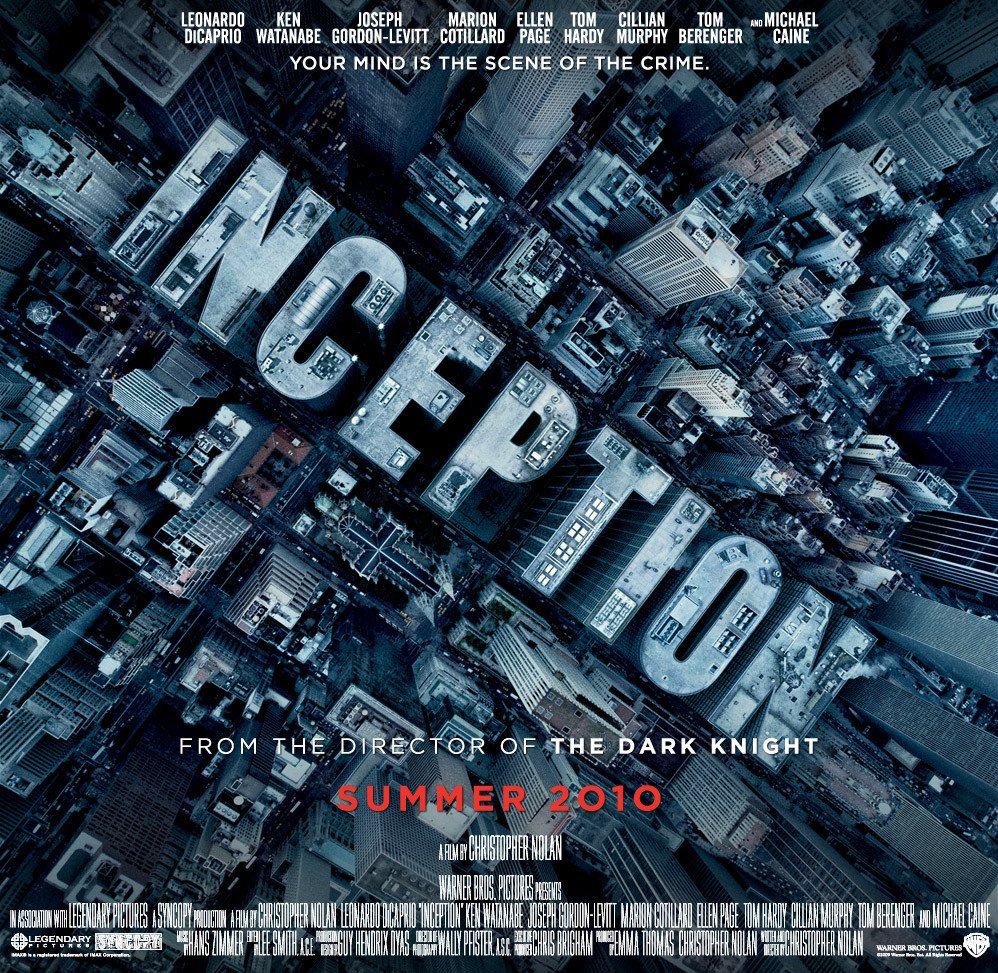
  • Inception Movie Mistakes & Errors !! Is it that goofy ?!


    Inception

    • Revealing mistakes: Early in the movie, when Saito is asking Cobb and Arthur to attempt the inception, Cobb and Arthur are standing outside Saito’s helicopter speaking to Saito. The rotor blades are spinning and the engine is running but there is no air moved over the two characters; their hair and clothes remain unmoved. (In the wider angle which follows, with the helicopter and the actors in the same shot, the wind is affecting them.)
    • Continuity: When the cab gets hit the first time the front grille with the Hyundai logo gets smashed in and disappears. In the second scene the grille reappears and the car has less damage than the scene before. And in the warehouse scene the grille disappears one final time.
    • Continuity: When the white van emerges from the warehouse, the passenger side mirror strikes the warehouse door. However, in the next shot of van’s exterior the passenger side mirror is fully extended. In subsequent shots the mirror is flipped back once more.
    • Continuity: In the scene with the falling van, the sleeping Arthur is shown without the headphones originally placed on his head. Before the van hits the water, he’s wearing the headphones again.
    • Continuity: One car explosion shown twice. First is the shot of the car exploding in a fireball, filling the frame. Minutes later the same car is shown exploding in the same fireball, but as part of a bigger shot from further away, in the bottom half of the frame.
    • Continuity: When Cobb and Ariadne are sitting at a café, her hand movements from shot to shot are out of sync, as she adjusts her hair or picks up her coffee cup.
    • Continuity: In the scene where Eames is chasing down the Hummer with skiers trailing behind it, the number of skiers on the ropes alternates between five and six in different shots.
    • Continuity: When Arthur collects Cobb in Tokyo, they leave the hotel room and go to the roof for the helicopter – it is clearly at night. When they are on the roof, it is already daylight.
    • Continuity: When Cobb first meets Miles, there’s a hair on Cobb’s right shoulder that appears and reappears between cuts.
    • Continuity: In the scene where Saito enters the helicopter and informs Cobb about the inception plan. In one shot, there is hard rain hitting the window in the helicopter. However, in a subsequent shot, there is no rain outside.
    • Continuity: In the scenes where Arthur and Ariadne are looking at the hotel rooms in the second layer of dreams, Ariadne’s bun keeps moving back and forth on her head. (In one scene, it is on top of her head, in the next, it is near the back, then moves up again.)
    • Crew or equipment visible: When Fischer’s cab is being hijacked, numerous production markings are visible on the street.
    • Continuity: In the scene where Saito is defending Fischer, the ventilation cover is open after they enter through it, but closed when Saito is sitting next to it. The cover is open again when Saito throws the grenade into the ventilation shaft.
    • Continuity: In the first scene, when the guard says “he had only these”, and places Cobb’s gun and totem on the table, the totem is tilted with the longer end up and it is stable enough not to fall down. When Cobb is brought in, the totem is lying stable, with its long end down and short end up.
    • Errors in geography: When the characters are riding the JR Shinkansen (bullet train), Cobb says that he needs to get off in Kyoto. In the next scene, there is an aerial view of Tokyo, not Kyoto. The red-colored Tokyo Tower can be seeing in that scene and also in the rooftop scene the following morning where they board the helicopter.
    • Revealing mistakes: At the beginning and end of the film when Cobb meets Saito in limbo, the full-eye contacts to make Leonardo DiCaprio’s and ‘Ken Watanabe”s eyes look glossy and bloodshot are visible in the close-up shots.
    • Continuity: During the scene where Ariadne and Cobb are sitting at a café a man in a yellow jacket passes by behind Ariadne. The camera then switches to Cobb. When it switches back to Ariadne you can see that the man in the background passes here once again,
    • Factual errors: At one point in the third dream, Saito is seen throwing a frag grenade down a vent and it explodes into fire. Frag grenades do not do that, they explode into fragments; incendiary grenades explode into fire, and they look quite different from frag grenades.
    • Revealing mistakes: When the team busts into room 491 in the hotel, the door opens fractionally before Cobb’s foot hits it in the POV shot.
    • Continuity: In the warehouse scene between Cobb and Ariadne, a Nikon DSLR camera is behind him on a desk. It disappears and reappears between shots.
    • Errors made by characters (possibly deliberate errors by the filmmakers): Saito is the CEO of a large competitor to Fischer’s corporation, however Fischer does not appear to recognize or acknowledge Saito both in his dream or on the plane.
    • Plot holes: While the van is falling, it’s said that Arthur only have a couple of minutes to synchronize the kick; however, this time wouldn’t enough to realize all the actions performed by Arthur (tie the dreamers together, beat the guards, call the elevator, cut the cables, put the bombs and explode them).
    • Continuity: When Arthur is tying up the team in the hotel scene, you see that Eames’ arms are tightly bound to his sides by the cord. When Arthur is pushing them down the corridors, Eames’ arms are now floating freely. Then, when we see the view looking down into the elevator, his arms are once again bound tightly.
    • Continuity: In the Kyoto hotel room scene, Cobb lies his pistol on a coffee table before answering his door. After he lets Arthur into the room, the pistol is no longer on the table, but Cobb removes the pistol from his belt then places it into his bag.
    • Incorrectly regarded as goofs: The immigration form Cobb is given in the plane towards the end of the movie is the white I-94 form given to those coming to the US on a visa. While it’s true that US citizens need only fill out a smaller blue customs declaration form, Cobb clearly declines the form.
    • Plot holes: When in a dream, time passes 20x slower, so 10 hours on the plane translates to 7 days on the first dream level, which translates to 6 months on the second. The explanation given for this is that outside of a dream you are only using 5% of your brain capacity, whereas you are using 100% in a dream. However, this does not account for why there is another 20x slow-down in the second level of a dream – there can be no further increase in the use of brain capacity.
    • Incorrectly regarded as goofs: It is established that the sensation of falling triggers the sleeper to wake up (i.e. tripping the chair wakes the sleeper before hitting the ground). However, neither the van rolling over nor the van dropping from the bridge (nor the sensation of zero gravity in dream level 2) wakes the sleepers. This is because the sleepers were dreaming within their dreams, and had to get a kick from the lowest-level dream first to realize the upper-level kick.
    • Errors made by characters (possibly deliberate errors by the filmmakers): Dom slipped the sedative into Fischer’s drink on the plane. But since the stewardess was in on the plot, she could have slipped it in before with much less chance of detection.
    • Plot holes: It is established that the time on the dream (or level) moves quicker than the time at the dreamer level. But the music played at the dreamer level (as a warning for wakening) should be listened much slower at the dream level, which does not occur. The music is listened at the same speed.
    • Revealing mistakes: When Saito uses his teeth to pull the safety pin from a fragmentation grenade (extremely difficult to do in reality) the safety level (also known as the “spoon”) does not fly off and remains in place even after the grenade is thrown several feet into the opening of a vent.
    • Factual errors: The characters dream while on a 10 hour flight from Sydney to Los Angeles on a Boeing 747; in reality, a 747 flight from Sydney to LAX takes at least 13.5 hours.
    • Revealing mistakes: When Fischer opens the vault door after recovering from limbo the code he punches ends with digit 9 instead of 1 (528491).
    • Continuity: Within the scene in which Saito asks Cobb to perform inception in the helicopter, Cobb exits the helicopter first and then Arthur. However, the cut immediately following shows Arthur in front of Cobb as they walk out.
    • Incorrectly regarded as goofs: When the bus on the bridge hits the guardrail, they continue flying horizontally for some time, but the passengers immediately lose gravity. This is correct: weightlessness is caused by acceleration, not by speed. Falling is a vertical acceleration, and gravity will immediately cause the bus to fall as soon as it is no longer supported by the bridge.

    + Source: IMDB