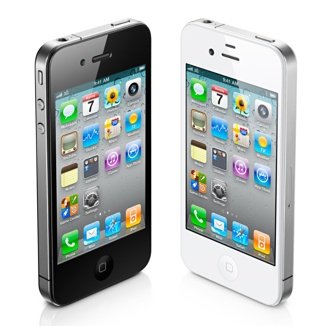
• Apple’s iOS 5 Tops Windows Phone ‘Mango’ in HTML5 Performance


    Microsoft recently launched a mobile IE9 testing site that allows web developers to test the HTML5 abilities of Windows Phone Mango

    Last month the software giant Microsoft demoed the Mango update with 500 new features, including a mobile version of Internet Explorer 9. In a preview video, Microsoft vice president Joe Belfiore ran a test between phones running Windows Phone 7, Android, BlackBerry OS and iOS and declared Windows Phone the winner. Microsoft’s device rendered HTML5 content at 24 frames per second, compared to 2 frames per second on the iPhone 4 and 11 FPS on the Android Nexus S device.

    But what about an iPhone 4 running the beta release of iOS 5? As noted by winrumors, it has reached 31 frames per second on the test. However, a screenshot demonstrating the test results still lists the iOS 4.3 version of Mobile Safari.

    Windows Phone 7 and iOS 5 are both scheduled for a fall release, though Microsoft and Apple have yet to set specific release dates.

    Apple unveiled iOS 5 earlier this month at the WWDC with over 200 new user features and 1500 APIs.

    Meanwhile, Microsoft has teamed up with Nokia, reportedly paying billions to Nokia in exchange for the company’s commitment to Windows Phone 7. In February, Nokia announced plans to ditch its Symbian mobile operating system and begin making smartphones running Windows Phone. Nokia confirmed last month that the first of its devices to run Windows Phone 7 will feature the Mango update.

    Research group IDC predicts the Microsoft and Nokia partnership will help boost Windows Phone market share from 3.8 percent in 2011 to 20.3 percent in 2015, while Apple’s share of the worldwide smartphone market is expected to dip from 18.2 percent to 16.9 percent during the same period.
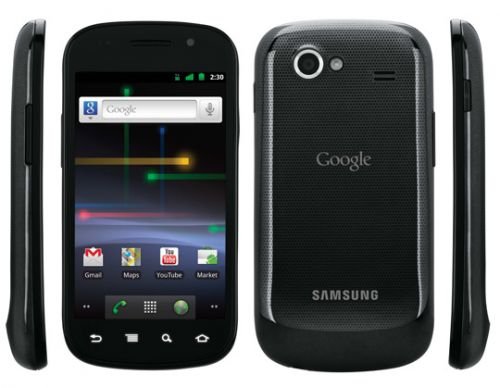
  • Nexus 4G Leaked: Dual-Core 1.5Ghz CPU, 1GB RAM, 720p Display, Android 4.0 and 4G LTE


    BGR provided some exclusive details about Google’s upcoming successor to the Nexus S smartphone, Nexus 4G. The device will run on fourth-generation networks based on Long-Term Evolution radio technology, it will have a native 720p display and will run a yet unreleased Android 4.0 version:

    We have been told that the Google Nexus 4G will feature a next-generation dual-core 1.2GHz or 1.5GHz CPU, and contrary to reports about it featuring an NVIDIA Kal-El processor, our source indicates it’s most likely an OMAP 4460 or a, ultra low-power 28nm Krait-based Snapdragon. The display is said to be a 720p HD “monster-sized” screen, and it won’t feature physical Android menu buttons below the screen anymore – everything will be software-based.

    You can expect a slim package containing – in addition to the above – a 4G LTE radio, a one-megapixel front camera for video calls and a five-megapixel camera on the back for taking stills and capturing full HD (1080p) video. A word about the back camera: “The 5-megapixel camera, however, is said to be an advanced 5-megapixel sensor delivering class-leading image quality in addition to superior low-light performance” When, you ask? Around Thanksgiving, if Boy Genius Reports’ sources are anything to go by.

  • Google Announces Voice Search, Search by Image, and Instant Pages For Desktop Computers


    Google announced a bunch of new features at Inside Search press conference, June 14th, 2011, which took place yesterday. The new additions are voice search on desktop computers, Instant Search and Image Search.

    Voice Search on the desktop

    Google Voice Search has been available in phones for years. Both Android handset and iPhone via Google’s search app have that feature for a long time, and now the same capability is brought to the desktop and initially, to the Chrome.

    Search by Image

    With this feature you can now upload images straight to the search engine and Google will search through the image file and attempt to locate any similar images and return you the terms they’re associated with:

    If you click the camera, you can upload any picture or plug in an image URL from the web and ask Google to figure out what it is. Try it out when digging through old vacation photos and trying to identify landmarks

    Google has released an extension for Chrome and Firefox that lets users identify any picture on the web by simply right-clicking.

    Instant Pages

    Google is bringing Instant Pages to Google Chrome. Available in all of the beta and dev versions of Google Chrome, Instant Pages is Google’s answer to the pre-fetching features built in to Mozilla’s Firefox. Instead of simply scraping basic HTML information ahead of time, however, Google says that their pre-rendering will grab other resources as well such as Javascript for snappy page loading. Instant Pages are only being used for search results (not targeted for ads specifically), but Google did mention they’ll be looking at how to best deliver ads to consumers in the future. Instant Pages allow the most common results to load instantly (in virtually zero seconds) when the user decides to load them:

    Google pointed out that mobile searches on its site have grown and now surpassed desktop searches.

    [via Google’s Blog]

  • Apple Starts Selling Unlocked iPhone 4, Works With Any GSM Network Worldwide


    Apple has begun selling unlocked GSM iPhone 4 in the US. The 16GB black model starts at $649 and the 32GB $749. The unlocked device has all the features and can be used worldwide on supported GSM:

    If you don’t want a multiyear service contract or if you prefer to use a local carrier when traveling abroad, the unlocked iPhone 4 is the best choice. It arrives without a micro-SIM card, so you’ll need an active micro-SIM card from any supported GSM carrier worldwide.

    The unlocked iPhone 4 requires an active micro-SIM card that you obtain from a supported GSM wireless carrier. Simply insert the micro-SIM card into the slot on your iPhone, connect to your Mac or PC using the USB cable, and launch iTunes on your computer to complete the setup.