Blog

×××
  • Kinect Sets Guinness World Record As The Fastest-Selling Consumer Electronics Device


    According to the guys at the Guinness World Records, Microsoft’s Kinect sold on average 133,333 units per day over a 60 day period. That totals a mind-blowing 8 million units in two months.

    Gaz Deaves, Editor of Guinness World Records 2011 Gamer’s Edition, said:

    The sales figures here speak for themselves. We can confirm that no other consumer electronics device sold faster within a 60-day time span, an incredible achievement considering the strength of the sector.

    These numbers mean MS shifted more Kinects than Apple sold iPads or iPhones during their first 60 days of being on sale.

    Labeled as a fad by many, Kinect took the world by storm with its futuristic approach to gaming, though a lack of titles since launch has left existing Kinect owners with shiny new kit but few games to use it with. It’s early days though, and few can argue with the hardware’s promise.

  • iPad 2 Teardown: Glass is 27 Percent Thinner


    iFixit has posted a detail teardown of the just released iPad 2, revealing a great deal about the inner working of the latest creation from Apple. The iPad 2′s glass is significantly thinner than the previous iPad. More from iFixit:

    • We did a quick glass and LCD thickness comparison:
      • iPad 1: lcd = 3.2 mm glass = .85 mm
      • iPad 2: lcd = 2.4 mm glass = .62 mm
    • The thickness of these components — especially that of the glass — could drastically reduce the durability of the device, especially the glass’ resistance to shattering. We’ll see in due time if the percentage of folks with broken iPad 2 front glass is dramatically different than that of the original iPad.
    • Lifting off the LCD exposes the iPad 2′s battery. We found a 3.8V, 25 watt-hour unit. That’s just a hair more than the original iPad’s 24.8 watt-hours, so any improved battery performance should be attributed to software and other hardware improvements.
    • We confirmed via software that the iPad 2 indeed has 512 MB of RAM.
    • The markings on the 1 GHz Apple A5 dual-core processor appear to be Samsung’s, but Chipworks will investigate in the forthcoming days to find out for sure.
    • Other components that power the iPad 2:
      • Toshiba TH58NVG7D2FLA89 16GB NAND Flash
      • Broadcom BCM5973KFBGH Microcontroller
      • Broadcom BCM5974 CKFBGH capacitative touchscreen controller
      • Texas Instruments CD3240B0 11AZ4JT touchscreen line driver
      • Broadcom BCM43291HKUBC Wi-Fi/Bluetooth/FM tuner combo chip
      • S6T2MLC N33C50V Power Management IC
      • ST Micro AGD8 2103 gyroscope
      • ST Micro LIS331DLH accelerometer
    • There’s also an Apple-branded 338S0940 A0BZ1101 SGP chip. This looks like the Cirrus audio codec Chipworks found in the Verizon iPhone, but they’ll have to get it off the board to make sure!

  • Untethered Jailbreak To Be Postponed Until Apple Releases iOS 4.3.1


    After the successful iOS 4.3 Untethered Jailbreak (video below), the hacker behind the exploit seemingly will hold his jailbreak until Apple releases iOS 4.3.1.

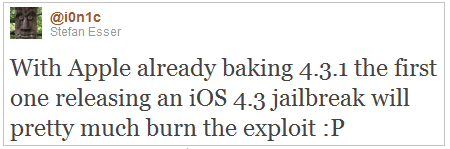
    With Apple already baking 4.3.1 the first one releasing an iOS 4.3 jailbreak will pretty much burn the exploit 😛

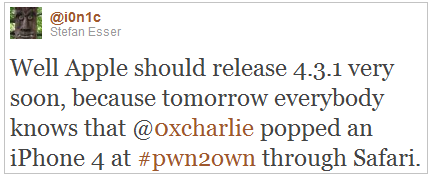
    Well Apple should release 4.3.1 very soon, because tomorrow everybody knows that @0xcharlie popped an iPhone 4 at #pwn2own through Safari.

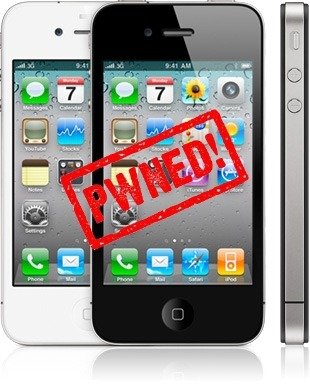
    The hacker expected that Apple will release iOS 4.3.1 specially after the hackers (at Pwn2Own contest) has successfully hacked iPhone 4 via vulnerability which found in Mobile Safari running iOS 4.2.1.

    [Tweets [1], [2]]

  • Charlie Miller Wins Again by Hacking into iPhone 4


    After The French security firm Vupen hacked Safari in just a few seconds here comes a new winning story but this time hacking into iPhone 4.

    Charlie Miller kept his Pwn2Own winning streak intact with another successful hack of an Apple product. This time by successfully hacking into iPhone 4 using an exploit found in Mobile Safari to swipe the address book of the compromised iPhone.


    The attack simply required that the target iPhone surfs to a rigged web site.  On first attempt at the drive-by exploit, the iPhone browser crashed but once it was relaunched, Miller was able to hijack the entire address book.

    Miller said the attack works perfectly against an iPhone running iOS 4.2.1 but will fail against the newest iOS 4.3 update. Apple has quietly added ASLR (address space layout randomization) to iOS 4.3, a key mitigation that puts up an extra roadblock for hackers.

    In an interview with ZDNet, Miller said:

    If you update your iPhone today, the [MobileSafari] vulnerability is still there, but the exploit won’t work. I’d have to bypass DEP and ASLR for this exploit to work.

    As of 4.3, because of the new ASLR, it will be much harder.